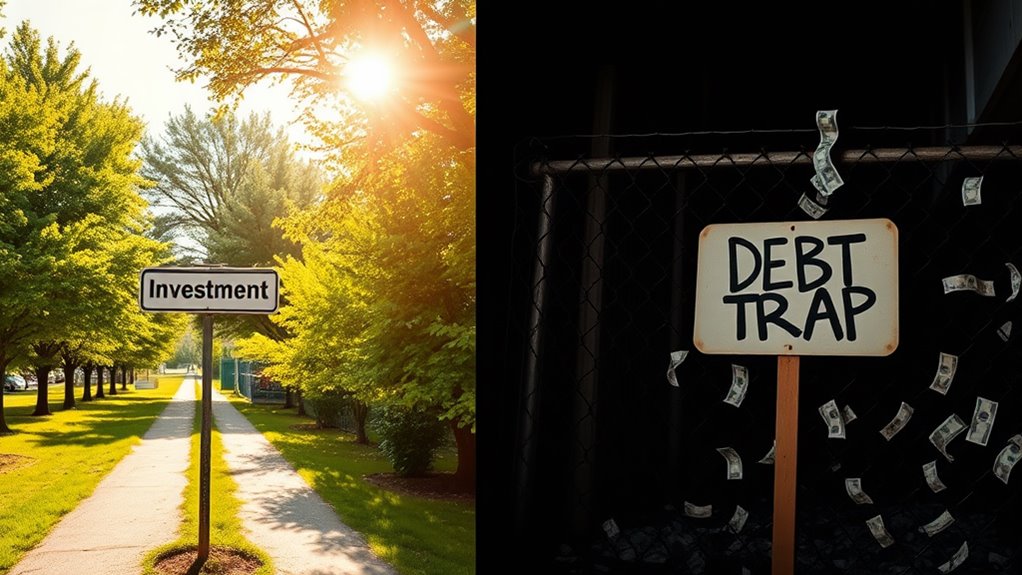
The difference between good debt and bad debt is essential for financial well-being. Good debt includes loans that finance valuable assets, such as mortgages, student loans, and business loans, which can generate future income and appreciate in value. Conversely, bad debt involves high-interest credit cards or loans for non-essential purchases that typically create financial burden without return. Comprehending the impact of each type on credit scores and long-term financial goals further emphasizes their significance. By distinguishing good from bad debt, individuals can make informed borrowing decisions. For deeper insights on effective debt management and strategies, exploring further may prove beneficial.
Defining Good Debt
Even though debt is often viewed negatively, distinguishing between good debt and bad debt is essential for making informed financial decisions. Good debt is characterized by its potential to create value and generate future income, ultimately enhancing one's financial well-being. This type of debt typically involves borrowing to invest in assets that appreciate over time or provide significant returns, thereby offering substantial debt advantages.
A prime example of good debt is a mortgage on a home. Real estate typically appreciates over time, and acquiring a property can lead to equity growth. Additionally, homeownership often provides tax advantages, further enhancing its investment potential. Likewise, student loans can be considered good debt when they fund education that leads to higher earning potential in the job market. The knowledge and skills acquired can facilitate career advancement, offsetting the initial borrowing costs.
Investing in business ventures can also fall under the category of good debt. When entrepreneurs leverage borrowing to expand operations or launch innovative projects, they position themselves for increased revenue streams. This strategic use of debt underscores its potential as a tool for growth rather than a financial burden.
Defining Bad Debt
Bad debt is often characterized by its ability to diminish financial stability and hinder long-term wealth accumulation. Unlike good debt, which can lead to asset creation and improved financial opportunities, bad debt tends to revolve around expenses that do not provide any lasting value or return. This includes high-interest consumer loans, credit card debt accrued from impulse purchases, and financing for depreciating assets such as luxury items or vacations.
The primary debt characteristics of bad debt include high interest rates, lack of investment potential, and a tendency to accumulate over time because of poor financial habits. When individuals rely on bad debt, they often trap themselves in a cycle of borrowing that can lead to financial distress. This results not only in monthly payments that strain budgets but additionally in a reduced capacity to save for future goals, such as retirement or property investment.
Furthermore, the impact of bad debt extends beyond immediate financial implications. It can erode credit scores, leading to higher borrowing costs in the future and limiting access to more favorable financial products. Essentially, cultivating sound financial habits is vital in distinguishing between good and bad debt. By prioritizing prudent spending and avoiding unnecessary debt, individuals can protect their financial health and lay the groundwork for sustainable wealth-building. Comprehending the nuances of bad debt enables better decision-making and promotes a more stable financial future.
Examples of Good Debt
Good debt, in stark contrast to its detrimental counterpart, serves as a strategic financial tool that can improve an individual's economic stability and growth potential. Comprehending the types of debt that can be beneficial is crucial for making informed financial decisions. Here are some common examples of good debt:
| Type of Debt | Purpose | Benefits |
|---|---|---|
| Student Loans | Financing education | Provides access to higher earning potential and career opportunities. |
| Mortgage | Home purchase | Offers mortgage benefits such as tax deductions and appreciation in home value. |
| Business Financing | Starting or broadening a business | Enables entrepreneurs to invest in growth, leading to increased cash flow. |
| Investment Properties | Real estate investment | Generates rental income and capital appreciation over time. |
Additionally, debt consolidation can be a strategic move to manage existing debts effectively, allowing for lower interest rates and improved cash flow. Home equity loans provide homeowners the ability to leverage their property value for necessary expenses or investments, whereas auto loans facilitate the acquisition of reliable transportation which can aid in employment opportunities.
Building credit responsibly through good debt can lead to better interest rates in the future, reinforcing the importance of managing these financial tools wisely. Overall, when approached thoughtfully, good debt can be an asset that propels individuals in the direction of long-term financial success.
Examples of Bad Debt
Bad debt can greatly hinder financial stability, often manifesting in forms such as high-interest credit cards and unnecessary personal loans. These types of debt typically carry exorbitant interest rates and can lead to a cycle of financial distress. Comprehending these examples is essential for making informed borrowing decisions and maintaining healthy financial practices.
High-Interest Credit Cards
High-interest credit cards can quickly spiral into a financial burden if not managed carefully. The allure of immediate purchases often leads consumers to accumulate credit card debt, which comes with exorbitant interest charges. Grasping the implications of this form of debt is critical for enhancing financial literacy.
Responsible borrowing entails recognizing how credit utilization affects one's overall financial health. High-interest rates can make it challenging to pay off balances, creating a cycle of debt that is difficult to escape. Implementing effective debt management strategies, such as budgeting techniques and payment strategies, is fundamental to mitigate the risks associated with high-interest credit cards.
Consumer awareness of the terms and conditions associated with credit cards can empower individuals to make informed choices. In some cases, debt consolidation may offer a viable solution, allowing borrowers to combine high-interest debts into a single loan with a lower interest rate. This approach can simplify payments and reduce overall interest costs. Ultimately, grasping the pitfalls of high-interest credit cards is important for maintaining financial stability and achieving long-term financial goals.
Unnecessary Personal Loans
The allure of financial freedom can sometimes lead individuals to make unwise borrowing decisions, particularly in relation to unnecessary personal loans. Such loans often carry significant risks and can spiral into a cycle of debt, highlighting the personal loan pitfalls that many face. Unnecessary borrowing can detract from financial stability and impede future opportunities.
Consider the following examples of unnecessary personal loans:
- Luxury Vacations: Opting for a loan to fund an extravagant trip can lead to regret when the bills arrive, overshadowing the memories made.
- High-End Electronics: Financing the latest gadgets may seem appealing, but these items quickly depreciate, leaving borrowers with a lingering debt that serves no long-term purpose.
- Fashion Purchases: Using a personal loan for designer clothing often results in financial strain, as these items provide fleeting satisfaction without lasting value.
Ultimately, unnecessary personal loans can become a burden, undermining financial health and leading to stress. It is essential to evaluate the necessity of borrowing before making such financial commitments, ensuring that each decision aligns with one's long-term financial goals.
Impact on Credit Score
Even though not all debt is created equal, comprehending its impact on your credit score is fundamental for managing your financial health. Your credit score is a key metric that lenders use to assess your creditworthiness, and it can be greatly influenced by how you handle both good and bad debt.
Credit utilization, which refers to the ratio of your outstanding credit balances to your total credit limits, plays an important role in shaping your credit score. A lower credit utilization ratio is usually favorable, indicating responsible credit management. Conversely, high utilization can negatively affect your score, making it imperative to keep your balances low relative to your limits.
Moreover, timely loan repayment is key to maintaining a positive credit score. Consistently making payments on time demonstrates reliability to lenders and can help improve your score over time. On the flip side, late payments or defaults can cause considerable damage to your credit profile.
To better understand the impact of good and bad debt on your credit score, consider the following table:
| Type of Debt | Impact on Credit Score |
|---|---|
| Good Debt (e.g., mortgage) | Can improve score if managed well |
| Bad Debt (e.g., payday loans) | Can harm score greatly |
| High Credit Utilization | Lowers score |
| Timely Loan Repayment | Improves score |
| Defaulting on Debt | Severely damages score |
Recognizing these factors allows you to make informed decisions regarding your debts and maintain a healthy credit profile.
Interest Rates Comparison
Interest rates play an important role in distinguishing between good debt and bad debt, as they greatly affect the overall cost of borrowing. Grasping different interest rate types—fixed rates and variable rates—can help individuals make informed financial decisions. Fixed rates remain constant throughout the loan term, providing stability and predictability. Conversely, variable rates can fluctuate with market conditions, potentially increasing the cost of borrowing over time.
When comparing loans, consider the following emotional factors that can greatly influence your financial health:
- Financial Security: Stable fixed rates can offer a sense of security, making budgeting more manageable.
- Cost of Borrowing: Higher variable rates may lead to increased financial burden, especially during economic downturns.
- Future Planning: Grasping repayment terms is critical for long-term financial goals, such as home ownership or education.
Additionally, it's essential to evaluate refinancing options and debt consolidation strategies if you find yourself struggling with high-interest debt. The impact of inflation can erode purchasing capacity, further complicating loan eligibility and credit utilization. By carefully examining interest rates and their implications, borrowers can navigate the intricacies of good and bad debt more effectively.
Ultimately, a thorough loan comparison helps individuals align their debt strategies with their financial aspirations, ensuring they make choices that support their long-term goals while minimizing unnecessary costs.
Debt-to-Income Ratio
The debt-to-income ratio (DTI) is a critical metric that compares an individual's total monthly debt payments to their gross monthly income. Comprehending this calculation is fundamental for evaluating financial health and making informed borrowing decisions. Effectively managing DTI can play a significant role in distinguishing between good and bad debt, in the end influencing long-term financial stability.
Understanding Debt-to-Income Calculation
Debt-to-income (DTI) ratio serves as a crucial metric for evaluating an individual's financial health and borrowing capacity. It is defined as the percentage of your gross monthly income that goes toward servicing debt. A clear comprehension of this calculation is indispensable for effective financial literacy, as it helps distinguish between good debt, which can build wealth, and bad debt, which can hinder financial stability.
To calculate your DTI ratio, follow these steps:
- Total Your Monthly Debt Payments: Include all recurring payments such as mortgages, credit cards, and student loans.
- Calculate Your Gross Monthly Income: This is your total income before taxes and other deductions.
- Divide and Multiply: Divide your total monthly debt payments by your gross monthly income and multiply by 100 to convert it into a percentage.
A lower DTI ratio typically indicates better financial health, enhancing your ability to secure loans at favorable terms. Grasping these debt definitions is not just crucial for personal finance management but also empowers you to make informed decisions that can shape your financial future.
Importance of Managing Debt
Effectively managing debt is vital for maintaining financial stability and achieving long-term goals. One of the key metrics to evaluate in this process is the debt-to-income (DTI) ratio, which measures the percentage of your income that goes toward servicing debt. Comprehending and monitoring your DTI can improve your debt awareness and contribute to your overall financial literacy.
A lower DTI signifies better financial health, allowing for easier loan approvals and favorable interest rates. Conversely, a high DTI could indicate over-leverage, potentially leading to financial distress.
Here's a simple breakdown of DTI:
| DTI Ratio (%) | Financial Implications | Recommended Action |
|---|---|---|
| 0-20% | Excellent financial health | Continue monitoring |
| 21-36% | Manageable debt levels | Evaluate debt reduction |
| 37-49% | High debt burden | Create a repayment plan |
| 50% and above | Financial distress imminent | Seek professional advice |
Long-Term Financial Goals
Establishing long-term financial goals is a fundamental aspect of personal finance that individuals should regularly consider. These goals serve as a roadmap, guiding your financial decisions and helping you navigate the intricacies of debt. Grasping the distinction between good debt and bad debt is vital as you work toward achieving your savings goals and implementing effective investment strategies.
To promote a clearer vision of your long-term financial objectives, consider the following emotional points:
- Security in Retirement: Envision the peace of mind that comes from knowing you have sufficient savings for a comfortable retirement.
- Homeownership: Picture the joy of owning a home, a significant milestone that can be made easier with strategic use of good debt.
- Financial Independence: Reflect on the freedom that comes with being debt-free and having the ability to pursue your passions without financial constraints.
Strategies for Managing Debt
Effective management of debt requires a strategic approach, beginning with a well-structured budget that allocates funds particularly for debt repayment. Furthermore, prioritizing high-interest loans can greatly reduce the overall financial burden, allowing for a more efficient payoff strategy. By implementing these methods, individuals can regain control over their finances and work in the direction of achieving their long-term financial goals.
Budgeting for Debt Repayment
A well-structured budget is vital for anyone looking to manage debt effectively. By employing sound budgeting techniques, individuals can create a clear path toward financial stability. Below are three key debt repayment strategies that can inspire confidence and motivate action:
- Track Your Income and Expenses: Monitoring your cash flow allows you to identify areas where you can cut back, enabling you to allocate more funds toward debt repayment.
- Set a Debt Repayment Goal: Establish a specific target for paying off your debts. This concrete goal can create a sense of urgency and purpose, making your repayment process feel more achievable.
- Prioritize Savings for Emergencies: Although it's important to focus on debt, having a small emergency fund can prevent further borrowing in the event of unexpected expenses. This proactive measure promotes a more sustainable budgeting approach.
Prioritizing High-Interest Loans
Managing debt effectively requires a strategic approach, particularly in relation to high-interest loans. These loans, such as credit cards or personal loans with heightened interest rates, can greatly hinder your financial stability if not addressed without delay. Implementing robust debt repayment strategies is crucial to mitigate the impact of these debts.
One effective loan prioritization method is the avalanche method, where you focus on paying off the loan with the highest interest rate first, all the while making minimum payments on others. This approach minimizes the amount of interest paid over time and hastens the overall debt repayment process. Alternatively, the snowball method encourages you to tackle the smallest debts first, which can provide psychological motivation as you experience quick wins.
Regardless of the method chosen, consistently reviewing your budget and adjusting it to allocate more funds to high-interest loans is critical. This disciplined approach not merely reduces the principal balance more swiftly but likewise helps cultivate a sense of financial control. Ultimately, prioritizing high-interest loans is a proactive step toward financial health, allowing for clearer pathways to achieving long-term financial goals.
Questions to Consider Before Borrowing
Before borrowing, it is vital to consistently evaluate various factors that can impact your financial future. Comprehending the implications of your borrowing decisions can help safeguard your financial health. Here are three significant questions to ponder:
- What is the borrowing purpose? Identify whether the loan will contribute to a valuable asset, such as education or a home, or if it will finance discretionary spending that may not improve your financial stability.
- Do I have a solid repayment plan? Assess your current financial situation, including your emergency fund and spending habits. Is the loan amount manageable within your budget, considering the interest rate and loan terms? A clear repayment strategy reduces the risk of falling into bad debt.
- What is the lender's reputation? Research lenders thoroughly, focusing on their track record, customer reviews, and transparency regarding fees and conditions. A reputable lender should offer favorable terms and a clear awareness of your credit history.
Frequently Asked Questions
Can Good Debt Ever Become Bad Debt Over Time?
Yes, good debt can certainly become bad debt over time. This shift often occurs because of poor debt management practices or changes in financial circumstances, such as job loss or increased interest rates. Financial education plays an essential role in comprehending how to assess and manage debt effectively. Regularly reviewing financial commitments and adjusting repayment strategies can help prevent good debt from deteriorating into a burden that negatively impacts overall financial health.
How Do Lenders Differentiate Between Good and Bad Debt?
Lenders often navigate the murky waters of debt types by employing specific criteria. They assess the purpose of the debt, repayment history, and the borrower's financial stability. Typically, loans that contribute to asset growth or improve creditworthiness are deemed favorable, whereas those leading to significant financial strain may be viewed negatively. In the end, comprehending these distinctions helps lenders determine risk levels and informs their lending decisions, ensuring they don't throw good money after bad.
Is It Possible to Have Too Much Good Debt?
Yes, it is possible to have too much good debt. Although good debt typically contributes to financial growth, excessive amounts can strain one's budget and hinder cash flow. Good debt limits should be established to guarantee manageable repayment. Individuals must maintain a balanced approach, monitoring their overall financial situation and prioritizing responsible management of debt. In the end, effective debt management is crucial for sustaining financial health and achieving long-term objectives.
What Is the Role of Credit Utilization in Debt Classification?
Credit utilization plays a key role in debt classification as it directly impacts an individual's credit score. This metric represents the ratio of outstanding credit card balances to total credit limits. High credit utilization may signal financial distress, potentially categorizing debt unfavorably. Conversely, maintaining low utilization rates suggests effective debt management and responsible credit use, contributing positively to one's credit profile. Consequently, comprehending credit utilization is vital for informed financial decision-making.
Can Bad Debt Be Converted Into Good Debt?
Converting bad debt into good debt is possible through effective debt management and strategic financial planning. By consolidating high-interest debts into lower-interest loans or refinancing, individuals can improve their financial situation. Furthermore, enhancing financial literacy enables individuals to make informed decisions, prioritize debt repayment, and avoid unnecessary borrowing. Ultimately, transforming bad debt into good debt requires a disciplined approach and a commitment to comprehending financial principles for long-term stability.