To design a functional outdoor space, start by evaluating your area's dimensions, features, and environmental factors. Define the purpose of your space—whether it's for gathering, relaxing, or gardening—and create distinct zones accordingly. Choose multi-functional furniture that fits your layout and encourages movement. Incorporate greenery, layering plants for depth as you consider native species for sustainability. Improve comfort with ambient lighting and cozy textiles, and use weather-resistant materials for ease of maintenance. Each choice contributes to a beautiful setting customized to your lifestyle. There's much more to explore to make your outdoor area truly exceptional.
Assessing Your Outdoor Area
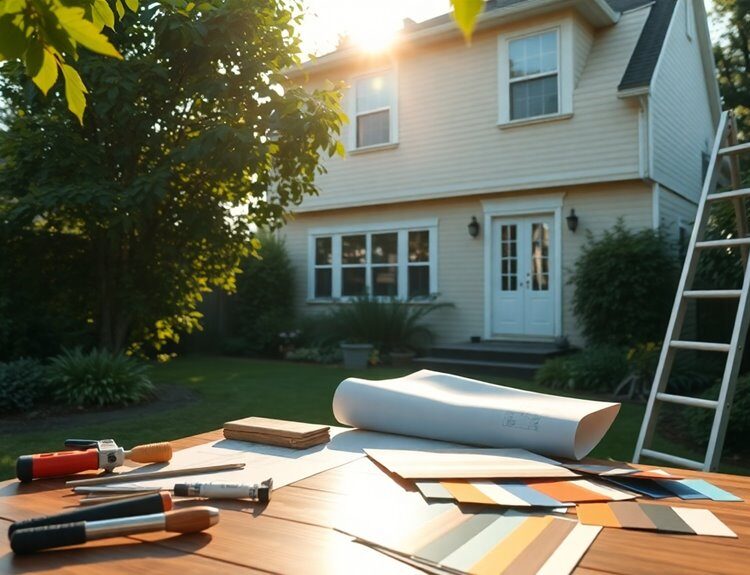
When you start planning your outdoor space, the first step is to assess your current area. This site evaluation is vital for comprehending the potential and limitations of your surroundings. Grab a notepad and take a walk around; observe the dimensions, shape, and any existing features like trees, pathways, or structures. These details will inform your design choices and help you visualize your innovative ideas.
Next, consider the environmental factors impacting your space. Is the area shaded or sunny? How does the wind flow through it? Take note of the soil type and drainage patterns, as these elements can greatly affect plant selection and layout. By grasping these conditions, you'll be able to create a more harmonious and sustainable outdoor environment.
Don't forget to assess the surrounding scenery as well. Look for views you want to improve or block. Determine whether there are any noise or privacy concerns that might influence your design. These insights will guide you in formulating a functional outdoor space that meets your needs.
Finally, think about seasonal changes. Observe how your outdoor area transforms throughout the year. This knowledge will enable you to choose materials and plants that not just thrive but additionally add character and depth to your design.
Defining Your Purpose
To create a truly functional outdoor space, you need to define your purpose. Think about the primary activities you want to enjoy, how seasonal changes might affect your use, and any space limitations you have. This clarity will guide your design choices and guarantee your outdoor area meets your needs.
Identify Primary Activities
Identifying primary activities is crucial for designing a functional outdoor space that meets your needs. Start by envisioning how you'll use the area. Are you enthusiastic to host family gatherings, or do you want a serene spot for relaxation? Consider incorporating designated relaxation zones with comfortable seating and shade for reading or meditating.
If you enjoy gardening projects, allocate space for planting and nurturing your favorite flora. Think about creating pet-friendly areas where your furry friends can roam freely without damaging your surroundings. For those who love active fun, plan areas for recreational sports like volleyball or badminton, ensuring that these spaces are easily accessible.
Don't forget about the allure of outdoor cooking experiences! An outdoor kitchen or grilling station can uplift your entertaining spaces, making it easy to host lively cookouts. By clearly defining these primary activities, you'll create a versatile outdoor environment that improves your lifestyle. Remember, the key to innovation lies in blending functionality with your unique preferences—your outdoor space should reflect your passions and pave the way for unforgettable moments.
Consider Seasonal Usage
Planning how you'll use your outdoor space throughout the year can greatly impact its design. To create a multifunctional area, think about the seasonal activities you enjoy. Whether you're hosting summer barbecues, winter gatherings, or cozy fall evenings, your space should adapt to these experiences.
Consider climate considerations when choosing materials and features. For instance, if you live in a region with harsh winters, opt for durable furniture that can withstand the elements, or design a sheltered area to protect against snow and rain. Alternatively, if you're in a warmer climate, you might prioritize shade options, like pergolas or large umbrellas, to keep your space cool and inviting.
Incorporate elements that improve comfort and enjoyment throughout the seasons. Install a fire pit for chilly nights, or create an outdoor kitchen for those summer cookouts. Think about adding seasonal decor that can easily be updated, allowing you to refresh your space as the months change. By thoughtfully considering how you'll engage with your outdoor area all year round, you'll create an innovative, functional space that truly reflects your lifestyle.
Assess Space Limitations
When designing your outdoor space, it is crucial to evaluate the limitations of your area to define its purpose effectively. Start by identifying any space constraints that may impact your design. Are there existing structures, trees, or uneven terrain that you'll need to work around? Comprehending these physical limitations will guide your vision and keep your plans grounded in reality.
Next, think about how you'll optimize the layout. Consider the flow of movement and how people will interact with the space. Will you create cozy conversation areas, or do you want a more open layout for gatherings? By carefully planning the arrangement of furniture and features, you can maximize functionality as well as staying true to your aesthetic goals.
Don't forget to take note of zoning regulations or property lines, as these can affect your design options. By thoroughly evaluating these limitations, you'll not just define the purpose of your outdoor space but will inspire innovation. This way, you can create a functional and inviting area that makes the most of what you have, all whilst embracing your unique style.
Selecting Suitable Furniture
When selecting suitable furniture for your outdoor space, start by evaluating your space requirements to guarantee a good fit. Next, choose weather-resistant materials that can withstand the elements as you maintain their appeal. Finally, don't forget to prioritize comfort and style, so you can enjoy your outdoor area to the fullest.
Assessing Space Requirements
Choosing the right furniture for your outdoor space is essential for creating a functional and inviting area. To achieve effective space optimization and layout planning, you need to assess your space requirements carefully. Start by measuring your area to understand its dimensions. This will help you visualize how different furniture pieces will fit and function together.
Consider the following when selecting furniture:
- Versatility: Opt for multi-functional pieces that can serve various purposes.
- Scale: Choose items that are proportionate to your space, avoiding oversized or undersized furniture that disrupts flow.
- Arrangement: Plan your layout to encourage conversation and movement, ensuring easy access to pathways.
- Style: Select furniture that complements your aesthetic and remains practical for outdoor conditions.
Choosing Weather-Resistant Materials
Durable materials are crucial for outdoor furniture, as they directly impact longevity and maintenance. When selecting furniture, consider innovative options like weather-resistant metals, synthetic wicker, and treated wood that can withstand the elements without compromising aesthetic appeal. These materials not merely resist fading and moisture damage but additionally require minimal upkeep, freeing up your time for enjoyment.
Incorporate complementary textures to create an engaging outdoor atmosphere. Mixing materials like sleek aluminum with cozy textiles can improve your space, providing visual interest and a modern touch. Think about adding cushions made from fade-resistant fabric, which boosts comfort as you maintain durability.
Color harmony is key to a cohesive look. Choose furniture in shades that complement your garden or patio surroundings. Earthy tones can blend nicely with natural settings, whereas bold colors can add a lively pop against lush greenery.
Ultimately, focus on selecting weather-resistant materials that reflect your personal style as you ensure your outdoor space remains functional and beautiful for years to come. By prioritizing innovation in your choices, you'll create a stunning outdoor environment that stands the test of time.
Prioritizing Comfort and Style
Comfort and style are essential elements in creating an inviting outdoor space. When selecting suitable furniture, you want pieces that not just look good but also improve your outdoor experience. Consider innovative designs that incorporate outdoor textiles, ensuring durability and ease of maintenance.
To raise your space, keep these key points in mind:
- Ergonomic seating: Choose lounge chairs and sofas that offer support and comfort.
- Varied textures: Mix cushions and throws made from outdoor textiles to add dimension.
- Cohesive color palettes: Select colors that harmonize with your surroundings, creating a seamless flow between your indoor and outdoor spaces.
- Multi-functional pieces: Opt for furniture that can serve multiple purposes, like benches with storage or tables that can expand for gatherings.
Incorporating Greenery and Plants
As you plan your outdoor space, incorporating greenery and plants can transform it into a lively, inviting oasis. The key lies in thoughtful plant selection that reflects your style and complements your environment. Consider a mix of native plants, which are not only sustainable but also support local wildlife. Look for vivid flowers and lush foliage that provide a burst of color and texture, creating visual interest throughout the seasons.
One innovative approach you might explore is vertical gardening. This technique maximizes limited space and adds a striking element to your outdoor design. Using trellises, wall planters, or vertical garden systems, you can create a stunning green wall filled with herbs, succulents, or flowering plants. This not only improves aesthetics but also betters air quality and encourages biodiversity.
Don't forget about layering your plants. Arrange taller varieties in the back and shorter ones in the front to create depth and dimension. Incorporate hanging plants for added visual appeal and to draw the eye upward, making your outdoor area feel larger and more inviting.
Lastly, consider seasonal changes. Select a variety of plants that bloom at different times to guarantee your space is always lively. By thoughtfully integrating greenery, you'll create a dynamic outdoor sanctuary that invites relaxation and enjoyment. So, embrace your inner innovator and let your outdoor space flourish with life!
Enhancing Comfort and Ambiance
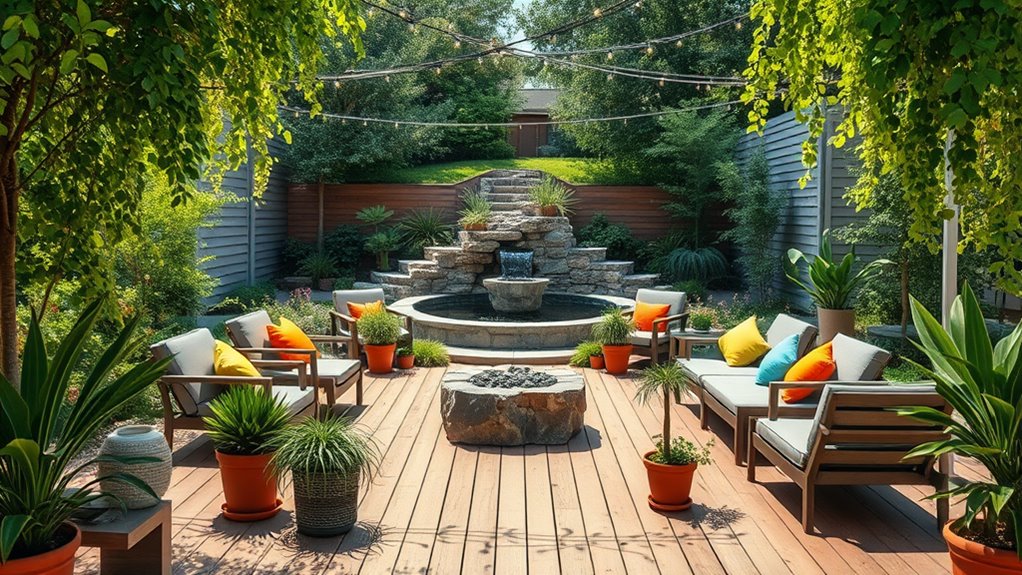
Creating a cozy outdoor environment is essential for making your space feel inviting and enjoyable. You want to transform your area into a retreat that beckons you and your guests to linger. To achieve this, pay attention to key elements that improve comfort and ambiance. Incorporate soft lighting, such as string lights or lanterns, to add warmth and a welcoming glow. Comfortable seating with plush cushions and throws can make your space more inviting. If you’re wondering how to create a cozy retreat, consider adding elements like an outdoor rug, a fire pit, or lush greenery to enhance the ambiance.
Start with outdoor lighting. Soft, ambient lighting can create a magical atmosphere as the sun sets. Consider string lights, lanterns, or solar-operated fixtures to illuminate pathways and seating areas without overwhelming brightness.
Next, think about sound elements. The gentle trickle of a water feature, like a fountain, can add tranquility, whereas strategically placed speakers can fill the air with your favorite tunes.
Incorporate comfortable seating options that invite relaxation. Whether it's plush cushions on a sofa or chic hammocks, the materials and colors you choose can improve the overall vibe.
Lastly, don't underestimate the influence of textiles.
- Outdoor rugs can define spaces and add warmth.
- Throw pillows can introduce color and comfort.
- Blankets offer both style and coziness, especially on cooler evenings.
- Canopies or umbrellas provide shade and create an intimate atmosphere.
Maintaining Your Outdoor Space
Maintaining your outdoor space is crucial for preserving its beauty and functionality. A well-kept area not only improves your home's appeal but additionally supports healthy plant growth and an enjoyable environment. Start by establishing seasonal maintenance routines that include cleaning and inspecting your outdoor lighting and irrigation systems. Regularly check for any damage and guarantee everything is functioning efficiently.
You'll also want to prioritize pest control to protect your plants. Implementing integrated pest management techniques can effectively minimize pests without harming beneficial insects. Focus on soil health by enriching it with organic matter, which can improve drainage and nutrient availability.
Here's a simple table to help you organize your maintenance tasks:
| Task | Frequency |
|---|---|
| Cleaning routines | Weekly |
| Pest control | Monthly |
| Seasonal checks | Quarterly |
Don't forget about furniture storage! During winter, safeguard your outdoor furniture by storing it properly or covering it to prevent damage from harsh weather. As you plan your garden design for the upcoming seasons, consider plant selection carefully to guarantee your space thrives year-round.
Finally, invest time in winter preparation. This involves mulching your garden beds and protecting delicate plants from frost. By staying proactive with these maintenance tasks, you'll enjoy a lively outdoor space that reflects your innovative spirit, ready for every season.
Frequently Asked Questions
How Can I Maximize Privacy in My Outdoor Space?
To maximize privacy in your outdoor space, consider using privacy screens and decorative trellises. You can explore landscaping options like strategic planting of tall shrubs or trees as natural barriers. Vertical gardens can improve both privacy and aesthetics. Don't forget outdoor curtains for added seclusion, and think about incorporating sound barriers to muffle noise. Combining these elements creates a serene retreat where you can relax without feeling exposed to the outside world.
What Are the Best Colors for Outdoor Furniture?
Choosing outdoor furniture colors is like painting your mood with lively strokes. You'll want to reflect on color psychology; warm hues like reds and oranges energize, whereas cool blues and greens promote tranquility. Keep an eye on seasonal trends—earthy tones resonate in fall, whereas bold colors shine in summer. By selecting innovative combinations, you can create an enchanting atmosphere that reflects your personality and transforms your outdoor space into a true retreat.
How Do I Choose Outdoor Lighting Fixtures?
Choosing outdoor lighting fixtures can transform your space. Start by considering ambient lighting to create a welcoming atmosphere. Think about fixture placement—position them to highlight pathways, seating areas, or architectural features. Don't shy away from innovative designs; consider solar-powered options or modern LED fixtures that complement your style. Experiment with different heights and angles to improve the visual appeal. By doing this, you'll raise your outdoor experience and set the perfect mood for gatherings.
What Materials Are Best for Outdoor Durability?
When you're selecting materials for outdoor durability, focus on weather-resistant materials like composite decking, aluminum, and stainless steel. These choices can withstand the elements and reduce maintenance considerations over time. You'll want to balance aesthetics with functionality, so consider innovative options like recycled plastics or natural stone for a unique touch. Investing in durable materials not just improves your space but also guarantees it stands the test of time, leaving you with less upkeep.
Can I Create a Sustainable Outdoor Space?
Absolutely, you can create a sustainable outdoor space! Start by incorporating sustainable gardening practices, like using native plants that require less water and maintenance. Choose eco-friendly materials for your hardscaping, such as reclaimed wood or recycled pavers. Consider adding a rain garden to manage runoff and promote biodiversity. By blending innovation with nature, you'll encourage a thriving outdoor environment that's not just beautiful but also advantageous for the ecosystem.