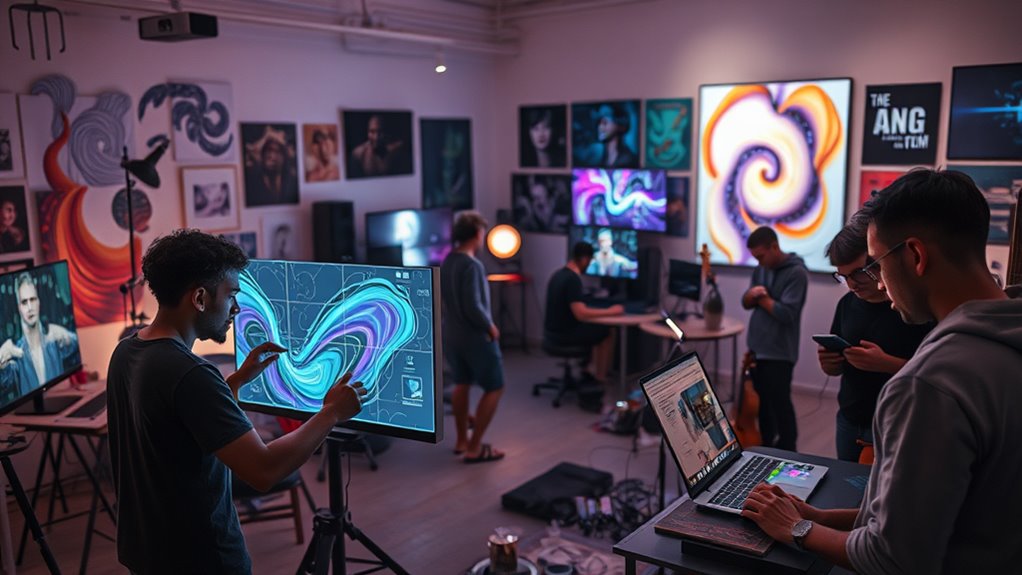
AI-driven tools are transforming creative industries by enhancing productivity and broadening artistic exploration. In graphic design, automation streamlines repetitive tasks, allowing designers to focus on innovation. In music production, AI assists in composing and mastering, promoting genre-blending and collaboration. Writers benefit from AI's ability to generate ideas and refine narratives, greatly improving efficiency. Moreover, these tools democratize artistic expression by making robust technology accessible to a broader audience. As the environment continues to evolve, the future trends hint at a deeper synergy between artists and AI, opening new avenues for creativity and collaboration. Insights await.
Overview of AI in Creativity
In recent years, a significant surge in the integration of artificial intelligence (AI) within creative industries has reshaped traditional practices and expanded the boundaries of artistic expression. AI creativity is no longer relegated to the domain of science fiction; it is a tangible force that improves various aspects of the creative process. Through advanced algorithms, AI technologies facilitate inspiration generation, enabling artists to explore new themes, concepts, and styles.
The role of AI in artistic collaboration has similarly evolved, providing creators with innovative tools that promote teamwork and collective ideation. By automating design processes, AI streamlines creative workflows, allowing artists to focus on their core competencies as they effectively manage time-consuming tasks. This design automation not only improves productivity but also opens avenues for more complex visual storytelling.
Moreover, AI-driven tools improve content personalization, adapting creative outputs to suit individual preferences and audience needs. This adaptability guarantees that artistic endeavors resonate more profoundly with viewers, creating a more engaging experience. Furthermore, the increasing tool accessibility of AI-powered applications democratizes creativity, empowering individuals from diverse backgrounds to produce high-quality artistic works.
AI in Graphic Design
Graphic design has increasingly embraced artificial intelligence as a transformative tool, improving both the creative process and the final output. AI tools are revolutionizing how designers approach their work, streamlining tasks through design automation that allows for greater focus on creativity and innovation. By automating repetitive elements such as layout adjustments and image resizing, designers can allocate more time to conceptual development and creative collaboration.
One area where AI is making significant strides is in the domain of generative art, where algorithms can produce unique visual pieces based on specific inputs and parameters. This technology not merely expands the boundaries of visual aesthetics but additionally introduces new dimensions to branding innovation. Designers can experiment with various styles and concepts quickly, leading to richer, more diverse branding strategies that resonate with target audiences.
Moreover, AI's application of color theory improves user experience by suggesting ideal color palettes that evoke desired emotions and responses. This capability allows designers to create compelling visuals that align with brand identities whilst ensuring the effectiveness of their messaging.
As AI continues to evolve, its integration into graphic design promises to redefine creative workflows. The synergy between human creativity and machine learning will likely yield groundbreaking solutions that improve visual storytelling, making AI an indispensable ally in the pursuit of design excellence. The future of graphic design is not merely about aesthetics; it is about creating meaningful connections through innovative tools and techniques that reshape the industry environment.
AI's Role in Music Production
Within the domain of music production, artificial intelligence is emerging as a powerful collaborator, reshaping how artists and producers create and refine their sound. AI composition tools enable musicians to explore new melodies and harmonies, allowing for a greater depth of creativity. By analyzing existing music, AI algorithms can identify patterns and trends, assisting in music analysis that informs the creative process.
Automated mixing has become an invaluable resource in the production workflow. These AI-driven systems can adjust levels and effects with precision, streamlining the audio mastering process and greatly reducing the time required for professional-quality mixes. This efficiency allows artists to focus more on their creative vision rather than technical intricacies.
Moreover, AI facilitates genre blending by analyzing various musical styles and suggesting innovative combinations that challenge traditional boundaries. This capability encourages artists to experiment, resulting in unique sounds that enrich the musical environment. Collaborative tools powered by AI improve communication among artists and producers, nurturing a more interactive and dynamic creative atmosphere.
Furthermore, AI plays an essential role in artist discovery by analyzing listener preferences and recommending emerging talents that may resonate with specific audiences. As music production continues to evolve, the integration of AI technologies is not merely a trend but a transformative force, enabling artists and producers to push creative limits, refine their sound, and engage with audiences in previously unimaginable ways.
Enhancing Writing and Storytelling
The scenery of writing and storytelling is undergoing a significant transformation thanks to the integration of artificial intelligence. This technology is not merely an improvement; it represents a paradigm shift in how narratives are conceived, developed, and presented. AI-powered tools facilitate creative collaboration, allowing writers to brainstorm and refine their ideas more effectively than ever before. By utilizing vast datasets, these tools can suggest character arcs, plot twists, and dialogue options, enriching the creative process.
Narrative generation is one of the most compelling applications of AI in writing. Algorithms can analyze existing literature to identify themes and structures that resonate with audiences. This capability enables writers to explore new genres and styles, breaking traditional boundaries and pushing the limits of their creativity. For instance, AI can assist in drafting initial chapters, which writers can then build upon, ensuring a more efficient and inspired writing experience.
Moreover, the application of AI in storytelling is not limited to fiction. It extends to marketing, journalism, and education, where customized narratives can engage specific audiences effectively. As writers and AI systems work together, they can uncover unique insights that may have otherwise gone unnoticed. This synergy encourages innovation and promotes a deeper exploration of human experiences through storytelling.
Future Trends in Creative AI
As the creative environment evolves with AI integration, the future of creative AI promises to reshape artistic expression in unprecedented ways. Emerging trends indicate that AI will not only improve individual creativity but also cultivate innovative creative collaboration among artists, designers, and technologists. This collaborative synergy is likely to spawn new artistic forms and mediums, blurring the lines between human and machine-generated content.
Furthermore, personalization trends are set to dominate the creative domain. AI tools will analyze user preferences and behaviors, allowing for the customization of content in real-time. This level of personalization will markedly improve the user experience, making art more relatable and accessible to diverse audiences. For instance, filmmakers might employ AI-driven platforms to tailor narrative elements based on viewer feedback, thereby creating a more immersive storytelling experience.
However, as we embrace these advancements, the importance of AI ethics cannot be overstated. Addressing concerns surrounding copyright, authorship, and the potential for bias in AI-generated content is essential. The creative community must establish ethical guidelines to navigate these challenges effectively, ensuring that innovation does not come at the expense of integrity.
Frequently Asked Questions
How Can AI Tools Enhance Collaboration Among Creative Teams?
"Many hands make light work." AI tools greatly improve collaboration among creative teams by facilitating efficient brainstorming sessions and enabling real-time feedback. These technologies streamline communication, allowing team members to share ideas instantaneously, regardless of location. Additionally, AI algorithms can analyze contributions and suggest improvements, promoting a more inclusive and dynamic creative process. As a result, the integration of AI not just accelerates project timelines but likewise enriches the overall quality of collaborative outputs.
What Are the Ethical Concerns Surrounding AI in Creative Industries?
The ethical concerns surrounding AI in creative industries primarily involve bias in algorithms and ownership issues. Bias can lead to discriminatory outputs, skewing representation and undermining the diversity of creative expression. Additionally, ownership issues arise when AI-generated content challenges traditional notions of authorship, complicating intellectual property rights. These factors necessitate careful consideration and proactive measures to guarantee that the integration of AI in creative processes aligns with ethical standards and promotes inclusivity.
How Do AI Tools Affect Job Opportunities in Creative Fields?
AI tools considerably impact job opportunities in creative fields, leading to both job displacement and the evolution of required skills. Whereas some traditional roles may diminish because of automation, new positions emerge that demand proficiency in AI technologies and collaboration with these tools. As a result, professionals must adapt by acquiring new competencies, cultivating a dynamic environment where creativity and technological fluency coexist, ultimately reshaping the job market within creative industries.
Can Ai-Generated Content Be Copyrighted or Protected Legally?
The legal terrain regarding AI-generated content and copyright remains complex. Currently, copyright laws primarily protect works created by human authors, raising content originality concerns when attributing AI-generated creations. Questions of AI ownership rights emerge, particularly regarding who holds the copyright—developers or users of the AI. As AI technologies advance, legal frameworks may evolve to address these challenges, ensuring proper protection for both human and AI-generated works in the creative domain.
Are There Limitations to What AI Can Create in Art and Design?
Curiously, whereas AI can generate compelling visuals and designs, there are inherent limitations to its creativity. AI lacks the deep emotional comprehension and cultural context that underpin true artistic originality. As a result, AI-generated art may sometimes replicate existing styles without innovation, leading to concerns about the uniqueness of its creations. Therefore, although AI serves as a potent tool in art and design, it still operates within constraints that human artists navigate with intuition and experience.