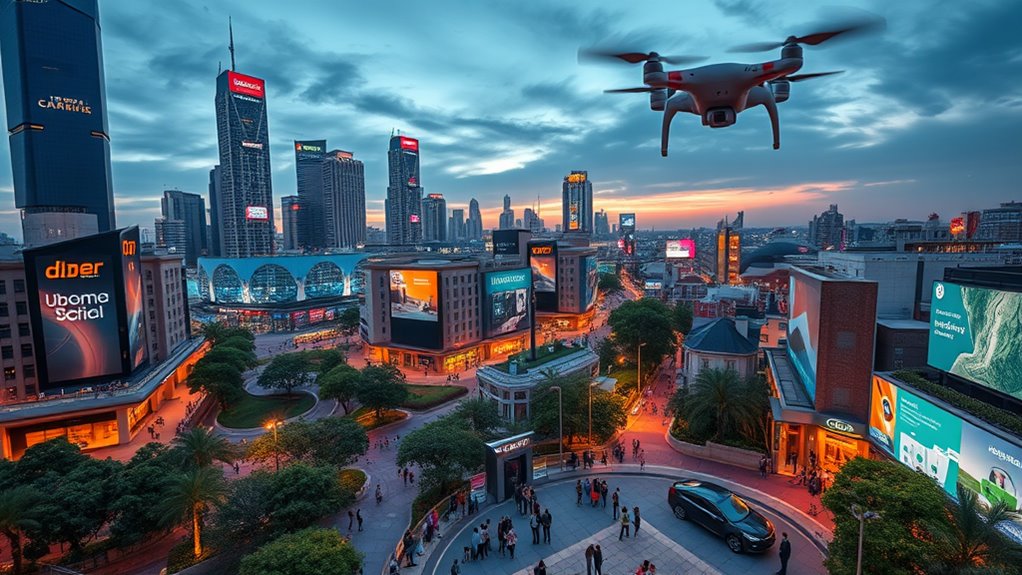
Smart cities are reshaping urban development by utilizing advanced technologies and data analytics to improve residents' quality of life. They employ IoT devices to collect real-time data, enhancing traffic flow and optimizing resource management. Sustainable practices, such as renewable energy integration and intelligent waste management, minimize environmental impact and promote resilience. Furthermore, community engagement through digital platforms guarantees that residents have a voice in governance. As cities evolve to address challenges and leverage innovation, a closer look at successful case studies reveals the diverse pathways smart cities are taking toward a sustainable future.
Definition of Smart Cities
Smart cities are increasingly recognized as urban areas that leverage advanced technology and data analytics to improve the quality of life for their residents. This concept encompasses a wide range of initiatives aimed at promoting urban innovation and building interconnected digital ecosystems. By integrating smart technologies into city infrastructure, local governments can improve efficiency, sustainability, and responsiveness to the needs of the community.
The essence of a smart city lies in its ability to collect and analyze data from various sources, including transportation systems, energy grids, and public services. This data-driven approach enables city planners and administrators to make informed decisions that address pressing urban challenges such as traffic congestion, waste management, and environmental sustainability. For instance, real-time data can optimize traffic flow, thereby reducing commute times and lowering emissions, which is a critical component of urban innovation.
Furthermore, smart cities prioritize citizen engagement through accessible digital platforms that encourage communication between residents and local authorities. This engagement not only empowers citizens to voice their concerns but likewise promotes collaborative problem-solving. As cities evolve into smart urban environments, they are better equipped to respond to changing demographics and societal needs.
Key Technologies in Smart Cities
Advanced technologies form the backbone of smart city initiatives, enabling cities to utilize data and improve urban living conditions. The integration of these technologies not only improves efficiency but additionally promotes sustainable development through innovative solutions. Key technologies in smart cities include:
- IoT Applications: Internet of Things (IoT) enables interconnected devices and urban sensors to collect real-time data. This data is essential for monitoring traffic patterns, pollution levels, and energy consumption, eventually leading to informed decision-making.
- AI Integration: Artificial Intelligence (AI) plays a significant role in analyzing the vast amounts of data generated by urban sensors and IoT applications. AI-driven adaptive systems can optimize traffic flow, predict maintenance needs, and improve public safety by analyzing patterns and anomalies.
- Renewable Energy: Green technologies, such as solar panels and wind turbines, are increasingly integrated into smart city infrastructure. By utilizing renewable energy sources, cities can reduce their carbon footprint and encourage sustainable urban development.
Furthermore, cloud computing and big data analytics facilitate the storage and processing of large datasets, enabling cities to leverage citizen feedback effectively. Mobility solutions, including smart transportation systems, rely on this data to improve accessibility and efficiency. As these technologies converge, they create a dynamic environment where urban planners can respond proactively to the changing needs of citizens, eventually leading to improved quality of life in urban areas.
Benefits of Smart Urban Development
Smart urban development offers numerous advantages that greatly improve the quality of life in cities. By improving infrastructure efficiency, municipalities can optimize resource allocation and reduce operational costs. Moreover, advancements in technology bolster public safety and promote sustainable resource management, ultimately creating a more resilient urban environment.
Enhanced Infrastructure Efficiency
How can urban environments considerably benefit from improved infrastructure efficiency? Improved infrastructure efficiency plays a pivotal role in the evolution of smart cities, allowing for optimized resource management and better quality of life. By integrating advanced technologies, cities can guarantee that their infrastructure meets the growing demands of their populations as they minimize environmental impact.
The benefits of improved infrastructure efficiency include:
- Smart Mobility Solutions: These systems reduce traffic congestion and promote the use of public transportation by providing real-time data, enabling better route planning and reducing travel times.
- Intelligent Waste Management: By utilizing sensors and data analytics, cities can optimize waste collection schedules, reduce operational costs, and improve recycling rates, leading to cleaner environments.
- Energy Efficiency: Smart grids and energy management systems allow for better monitoring and control of energy consumption, resulting in reduced waste and lower utility costs for residents.
Improved Public Safety
As urban populations grow and evolve, the integration of technology into city infrastructure greatly improves public safety across various dimensions. Smart cities leverage advanced urban surveillance systems to monitor neighborhoods, enhancing crime prevention strategies and promoting a sense of security among residents. These systems, when combined with predictive policing technologies, allow law enforcement to anticipate and mitigate potential threats before they escalate.
Emergency response optimization is another critical aspect of smart urban development. Real-time incident reporting facilitates quicker responses to emergencies, ensuring that first responders can reach affected areas more efficiently. This capability is further strengthened by community safety initiatives, which often involve collaboration between local authorities and residents.
Neighborhood watch programs are additionally improved through technology, encouraging citizens to participate actively in their safety while promoting public awareness campaigns that educate the community on crime prevention. By nurturing a cooperative environment, these initiatives empower residents and create a stronger bond within communities. To summarize, the incorporation of technological advancements in urban planning not only improves public safety but also develops a proactive culture that prioritizes the well-being of all citizens.
Sustainable Resource Management
The integration of technology in urban development promotes sustainable resource management, which is essential for addressing the challenges posed by growing populations and environmental concerns. By utilizing innovative solutions, cities can optimize their resources and create a more sustainable future.
- Energy Conservation: Smart grids facilitate efficient energy distribution, allowing cities to utilize renewable resources and reduce overall consumption.
- Waste Reduction: Implementing eco-friendly technologies and the principles of a circular economy enables urban areas to minimize waste and encourage recycling, thereby promoting a healthier environment.
- Water Management: Advanced water management systems utilize real-time data to optimize usage and reduce waste, ensuring that this critical resource is preserved for future generations.
Moreover, urban farming initiatives and green building practices contribute to resource optimization, enhancing food security and reducing the ecological footprint. As cities embrace these sustainable approaches, they address immediate challenges while promoting resilience in the face of future environmental pressures. In the end, sustainable resource management in smart cities is a fundamental step toward creating livable, eco-friendly urban environments that benefit all residents.
Case Studies of Successful Smart Cities
Successful smart cities exemplify the integration of technology and urban planning to improve the quality of life for residents. Various cities around the world showcase innovative approaches to urban challenges through advanced solutions. These case studies provide valuable insights into how technology can improve mobility, governance, and infrastructure.
| City | Key Focus Area |
|---|---|
| Barcelona | Mobility Improvements |
| Singapore | Efficient Governance |
| Amsterdam | Innovative Solutions |
| Helsinki | Improved Connectivity |
| Toronto | Collaborative Initiatives |
| Dubai | Advanced Infrastructure |
| Seoul | Integration of Technology |
| San Francisco | Data-Driven Decisions |
Barcelona has transformed urban mobility with smart traffic management systems that reduce congestion and improve public transport efficiency. Singapore's governance model utilizes data analytics for real-time decision-making, ensuring responsive public services. Amsterdam stands out for its commitment to innovation, particularly in sustainable transport solutions and smart energy systems.
Helsinki shines in connectivity, with extensive broadband access and integrated transport networks. Toronto emphasizes collaboration among citizens, businesses, and government to create solutions that benefit all stakeholders. Dubai's investment in infrastructure technology improves urban services, while Seoul's application of state-of-the-art technology optimizes city management.
Lastly, San Francisco leverages data analytics to inform urban planning and increase civic engagement. Each of these smart cities demonstrates a unique approach to urban development, highlighting the potential of technology to create sustainable, livable environments.
Challenges in Implementing Smart Solutions
Implementing smart solutions in urban environments presents significant challenges, including infrastructure limitations and high costs associated with upgrades. Moreover, data privacy concerns pose risks that must be carefully managed to maintain public trust. In addition, ensuring interoperability among diverse systems is vital for the seamless integration of smart technologies.
Infrastructure Limitations and Costs
Addressing infrastructure limitations and costs poses significant challenges for the realization of smart city solutions. As urban areas evolve, the need for adaptable infrastructure becomes paramount, necessitating innovative funding models and efficient maintenance strategies. The following factors illustrate key challenges:
- Financing Challenges: Securing adequate investment is critical. Public-private collaboration can alleviate some financial burdens, yet often faces hurdles in negotiation and alignment of interests.
- Technology Partnerships: Establishing effective technology partnerships is crucial for integrating advanced systems. Nevertheless, these collaborations can be complicated by varying investment priorities and differing organizational cultures.
- Economic Implications: A thorough cost-benefit analysis is necessary to evaluate the long-term economic implications of smart city initiatives. This analysis must consider urban resilience, ensuring that infrastructure can withstand future challenges and adapt to changing demands.
Ultimately, addressing these challenges requires a strategic focus on infrastructure adaptability and innovative funding solutions. By prioritizing collaborative approaches, cities can improve their capacity to implement smart solutions while ensuring sustainable growth and development.
Data Privacy Concerns
The integration of smart technologies into urban environments introduces a complex terrain of data privacy concerns that must be navigated with care. As cities deploy sensors and data-driven solutions, issues of data ownership and consent management emerge as critical challenges. Citizens must be informed about how their data is collected, used, and shared, ensuring that their digital rights are respected.
The ethical implications of surveillance also warrant attention. Surveillance ethics play an important role in determining the balance between safety and community privacy. Ensuring user anonymity in data collection processes can mitigate potential harms associated with invasive monitoring. Additionally, algorithmic bias presents risks in decision-making processes, potentially leading to unequal treatment of different demographic groups.
To promote trust, smart city initiatives must prioritize data transparency and strong sensor security measures. Engaging communities in discussions about data sharing practices encourages a collaborative spirit, empowering residents to voice their concerns and expectations. In the end, addressing these data privacy concerns is crucial for the successful implementation of smart solutions, allowing urban environments to thrive while safeguarding the rights and privacy of their inhabitants.
Interoperability of Systems
Maneuvering the interoperability of systems represents a significant challenge in the deployment of smart solutions within urban environments. Effective system integration is vital for ensuring that various technologies can communicate and operate cohesively. The complexity arises from the need for diverse platforms to achieve compatibility and facilitate data sharing among decentralized systems.
Key challenges include:
- Standardization Efforts: Without agreed-upon standards, different technologies may struggle to connect, limiting the potential for seamless connectivity across smart city applications.
- Cross Sector Collaboration: Collaboration among various sectors—government, private, and non-profit—is fundamental for nurturing an environment conducive to technology interoperability. This cooperation can improve real-time communication and data exchange.
- Network Resilience: As cities implement smart solutions, ensuring the resilience of networks against failures or attacks becomes paramount. A robust infrastructure must support the flow of information between systems during security and reliability.
Addressing these challenges requires a strategic approach that prioritizes platform compatibility and promotes an ecosystem where diverse systems can thrive together, eventually improving the efficiency and livability of urban spaces.
Role of Data in Urban Planning
Data plays a vital role in shaping modern urban planning, markedly enhancing decision-making processes by providing actionable insights. The integration of data analytics into urban development enables planners to systematically assess and address complex urban challenges. By leveraging predictive modeling, city officials can forecast the impacts of proposed policies and infrastructure projects, guaranteeing informed decisions that align with the community's needs.
Urban sensors play an essential role in real-time monitoring of city dynamics, collecting transportation data and environmental metrics that reflect the current state of urban life. This continuous stream of information supports decision support systems that optimize resource allocation and infrastructure maintenance. For instance, transportation data can reveal traffic patterns, guiding improvements in public transit and road networks.
Moreover, spatial analysis techniques empower urban planners to visualize demographic trends and land use patterns, facilitating a deeper comprehension of community dynamics. By combining these insights with citizen feedback, planners can create more responsive and sustainable urban environments. Engaging with the public guarantees that developments reflect the aspirations and concerns of residents, nurturing a sense of ownership and collaboration.
Community Engagement and Smart Cities
Effective urban planning increasingly relies on collaboration between city officials and community members, nurturing an environment where citizen input shapes the development of smart cities. This collaborative approach not only improves transparency but additionally empowers residents to play an active role in shaping their urban environment. Community engagement is vital for guaranteeing that the needs and aspirations of diverse populations are acknowledged and addressed.
To facilitate effective community engagement in smart cities, three key strategies can be employed:
- Participatory Budgeting: This approach allows citizens to directly influence how municipal funds are allocated. By engaging residents in the budgeting process, cities can guarantee that financial resources reflect community priorities and needs.
- Digital Literacy Initiatives: As smart cities rely heavily on technology, improving digital literacy among residents is critical. By providing training and resources, cities can empower community members to effectively utilize digital tools, guaranteeing that they can participate in discussions about urban development.
- Collaborative Platforms: Utilizing online platforms for dialogue and feedback can improve community engagement. These platforms allow for real-time input from residents, making it easier for city officials to gather diverse opinions and ideas.
Future Trends in Urban Development
Innovation is poised to redefine urban development in the coming years, as cities increasingly adopt advanced technologies and sustainable practices to improve livability and resilience. One of the most significant trends is the evolution of urban mobility. Cities are investing in mobility solutions that prioritize public transport, cycling, and pedestrian pathways, reducing reliance on personal vehicles. This shift not only improves accessibility but additionally contributes to lower emissions and a healthier urban environment.
Digital governance will play an essential role in shaping future cities, enabling real-time communication between local governments and citizens. By utilizing data analytics, municipalities can make informed decisions that cater to the needs of their communities, encouraging greater citizen participation. As cities embrace smart energy initiatives, they will increasingly utilize renewable resources and implement energy-efficient systems, promoting sustainability through smart grids and energy management.
Moreover, the rise of green architecture will redefine city environments, as buildings are designed with sustainable materials and energy-efficient technologies. This focus on eco-friendly construction will improve urban resilience, allowing cities to better withstand the impacts of climate change.
Finally, the establishment of innovation hubs within urban centers will facilitate tech integration, encouraging collaboration between startups, academia, and local governments. These hubs will not only drive economic growth but additionally create environments that encourage creativity and problem-solving in addressing urban challenges. Collectively, these trends signal a transformative era for urban development, where technology and sustainability converge to create thriving, resilient cities.
Policy Implications for Smart Initiatives
The successful implementation of smart initiatives in urban development necessitates thorough policy frameworks that address technological integration, sustainability, and community engagement. Policymakers must navigate several significant areas to guarantee that smart cities flourish while mitigating potential risks.
- Regulatory Challenges: It is fundamental to develop adaptable regulations that keep pace with rapid technological advancements. Policy frameworks should facilitate technology adoption while guaranteeing compliance with safety and privacy standards.
- Funding Strategies: Innovative funding strategies are vital for the sustainability of smart initiatives. Public-private partnerships can leverage private investment, while government grants and incentives can support innovation and improve community resilience.
- Equity Considerations: Policymakers must prioritize equity to avoid exacerbating existing inequalities. This involves engaging diverse stakeholders in decision-making processes to guarantee that marginalized communities benefit from smart city developments.
Stakeholder collaboration is paramount in addressing these challenges. By cultivating partnerships between public entities, private sectors, and community organizations, cities can create robust governance models that promote collective ownership of smart initiatives. Additionally, incorporating innovation incentives can stimulate local economies and improve the overall quality of urban life.
Ultimately, a well-structured approach to policy implications will not only support effective technology adoption but also guarantee that smart cities are inclusive, sustainable, and resilient to future challenges.
Frequently Asked Questions
How Do Smart Cities Impact Local Economies and Job Creation?
The juxtaposition of technological advancement and community needs underscores the crucial role smart cities play in local economies. As urban centers integrate smart solutions, they catalyze economic growth through improved efficiency and innovation. This transformation nurtures workforce development, equipping residents with skills necessary for emerging industries. As a result, smart cities not merely attract investment but additionally create diverse job opportunities, ensuring a sustainable economic ecosystem that benefits both individuals and the broader community.
What Role Do Citizens Play in Smart City Decision-Making?
Citizens play an essential role in smart city decision-making through citizen engagement and participatory governance. By actively participating in discussions and providing feedback, residents can influence urban planning and policy initiatives. This collaborative approach guarantees that the needs and preferences of the community are considered, promoting a sense of ownership and accountability. Additionally, involving citizens in the decision-making process improves transparency and strengthens the relationship between local authorities and the populace, ultimately leading to more effective outcomes.
How Are Privacy Concerns Addressed in Smart City Initiatives?
In the domain of smart cities, privacy concerns are akin to a vigilant guardian watching over a treasure trove. To address these worries, initiatives prioritize data security, implementing robust encryption and access controls to safeguard sensitive information. Transparent policies are established to mitigate fears of citizen surveillance, ensuring residents understand how their data is used. By nurturing public trust, smart city projects can flourish as they respect individual privacy, creating a harmonious balance between innovation and protection.
What Is the Cost of Transitioning to a Smart City?
The cost of moving to a smart city involves significant infrastructure investments and technology integration, which can vary widely based on the city's size and existing capabilities. Key funding sources often include public-private partnerships, enabling shared financial responsibility. Effective data management systems are vital to handle the information generated. Moreover, community engagement plays an important role in ensuring that the shift meets the needs of residents, thereby nurturing support and enhancing overall project success.
How Do Smart Cities Adapt to Climate Change Challenges?
In the face of climate change, smart cities are evolving into fortresses of resilience, equipped to withstand the storm. By prioritizing sustainable infrastructure, these urban environments integrate green technologies, such as renewable energy sources and efficient waste management systems. Furthermore, they utilize real-time data to anticipate climate-related challenges, enabling proactive responses that improve climate resilience. As a result, smart cities not only adapt but thrive, creating safer, more sustainable habitats for their inhabitants.