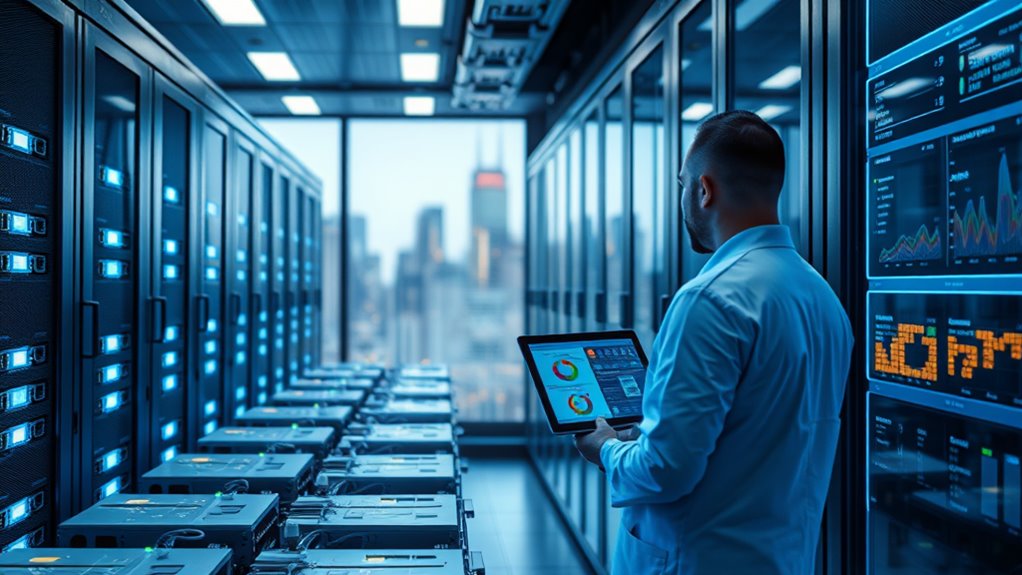
Edge computing is redefining data processing by decentralizing computational resources, allowing data to be processed closer to its source. This shift notably reduces latency and improves real-time decision-making. Organizations can achieve greater operational efficiency, lower costs, and enhanced data handling by minimizing reliance on centralized servers. It furthermore strengthens security by limiting data transmission over vulnerable networks as well as facilitating energy-efficient practices. As industries such as healthcare, manufacturing, and smart cities increasingly adopt these technologies, the impact of edge computing at various scales becomes more profound. Exploring its transformative potential further reveals additional insights into its evolving role in data management.
What Is Edge Computing?
Edge computing represents a transformative approach to data processing that improves efficiency and responsiveness by decentralizing computing resources. Instead of relying on centralized cloud servers, edge computing leverages a network of decentralized networks to process data closer to its source. This edge architecture boosts data locality, allowing for real-time analytics and decision-making, which is particularly critical in environments requiring immediate responses, such as IoT applications and autonomous systems.
One of the primary advantages of edge computing is latency reduction, as it minimizes the time taken for data to travel to and from centralized data centers. By strategically placing computing resources in various locations, organizations can optimize resource allocation and guarantee that processing occurs where it is most effective. This approach additionally presents scalability options, enabling businesses to expand their infrastructure in line with demand without the need for extensive overhauls.
However, the shift to edge computing introduces several security considerations. With data being processed across multiple nodes, maintaining data sovereignty becomes paramount. Organizations must verify compliance with regulations governing data privacy and protection, particularly in industries like healthcare and finance. Moreover, the network topology of edge computing requires robust security measures to safeguard against potential vulnerabilities.
Benefits of Edge Computing
A notable advantage of edge computing is its ability to improve operational efficiency by processing data closer to its source. This proximity reduces network latency, allowing for real-time data analysis and quicker decision-making. By minimizing the distance that data must travel, organizations can improve application flexibility, adapting more swiftly to changing demands.
Moreover, edge computing addresses security concerns by limiting data transmission over potentially vulnerable networks. Sensitive information can be processed locally, thereby improving data privacy and helping organizations meet regulatory compliance requirements. This localized approach likewise contributes to cost efficiency, as it reduces the bandwidth needed for data transfer to centralized cloud servers.
Energy consumption is another vital factor where edge computing shines. By processing data at the edge, companies can markedly lower energy costs associated with data transmission and storage in centralized data centers. This reduction aligns with sustainability goals and helps mitigate scalability issues, enabling organizations to expand their operations without overwhelming existing infrastructure.
Furthermore, effective deployment strategies are fundamental for maximizing the benefits of edge computing. Selecting the right vendors is important, as this choice can impact the performance, reliability, and security of edge solutions. By leveraging the advantages of edge computing, organizations can create a more resilient and efficient data processing ecosystem, ultimately driving innovation and improving overall business performance. The combination of these benefits positions edge computing as a transformative force in the realm of data processing.
Key Technologies Driving Edge Computing
The advancement of edge computing is greatly influenced by key technologies such as IoT integration and improved processing capabilities. IoT devices facilitate real-time data collection and analysis at the edge, reducing latency and bandwidth usage. Meanwhile, advanced processing technologies enable faster data handling and decision-making, further optimizing edge computing environments.
IoT Integration and Impact
With the rapid proliferation of Internet of Things (IoT) devices, integration of these technologies into edge computing frameworks has become essential for enhancing data processing capabilities. This synergy not only improves operational efficiency but also addresses significant challenges associated with traditional cloud computing. By utilizing sensor networks, edge computing reduces network latency, enabling real-time analytics that are critical for decision-making.
The impact of IoT integration in edge computing can be summarized through several key aspects:
- Enhanced device interoperability: Guarantees seamless communication between diverse devices.
- Improved resource optimization: Maximizes the use of computing resources at the edge.
- Strengthened data privacy: Minimizes data exposure by processing it closer to the source.
- Robust edge security: Protects sensitive information from potential breaches.
- Effective cloud synergy: Balances local processing and centralized cloud functionalities.
These elements collectively empower organizations to utilize the full potential of IoT technologies during maintaining a focus on data privacy and security. As IoT continues to evolve, its integration with edge computing will redefine how data is processed, paving the way for smarter and more efficient systems.
Advanced Processing Capabilities
How are advanced processing capabilities transforming edge computing? The evolution of edge computing is greatly driven by improved processing capabilities, enabling more sophisticated data analytics directly at the source of data generation. This shift allows organizations to analyze and process data in real-time, leading to immediate insights and faster decision-making.
By leveraging edge devices equipped with robust processors and machine learning algorithms, businesses can achieve remarkable processing efficiency. This efficiency minimizes latency and reduces the bandwidth required for data transmission to centralized cloud systems. As a result, organizations can manage vast amounts of data generated by Internet of Things (IoT) devices without overwhelming their networks.
Furthermore, advanced processing capabilities enable edge computing to support a myriad of applications, from autonomous vehicles to smart cities. These applications require timely and accurate data processing to function effectively, and edge computing meets this demand by ensuring that critical data is processed locally.
Industries Transforming With Edge Computing
Edge computing is revolutionizing various industries by enhancing efficiency and responsiveness in data processing. In manufacturing, automation advancements are streamlining operations, whereas smart cities are leveraging this technology for improved infrastructure management. Furthermore, healthcare data management is becoming more effective, ensuring timely access to critical information for better patient outcomes.
Manufacturing Automation Advancements
In recent years, the manufacturing sector has undergone a significant transformation driven by advancements in edge computing technology. This evolution is characterized by the integration of real-time data processing and analytics at the edge, which enables manufacturers to improve operational efficiency and reduce downtime.
Key benefits of manufacturing automation advancements through edge computing include:
- Improved predictive maintenance that minimizes equipment failures
- Enhanced robotics integration for streamlined production processes
- Reduced latency in data processing, allowing for swift decision-making
- Increased flexibility in adapting to market demands
- Higher overall productivity, leading to greater profitability
The ability to gather and analyze data from machines at the point of operation allows companies to anticipate maintenance needs before they become critical. Furthermore, robotics integration energized by edge computing promotes collaboration between human workers and machines, elevating safety and efficiency on the factory floor. As manufacturers embrace these technologies, they not only improve their competitive edge but also contribute to a more sustainable and responsive industrial environment. The future of manufacturing is certainly one where edge computing plays a central role in driving innovation and operational excellence.
Smart Cities Integration
The advancements in edge computing are not limited to manufacturing; they are also revolutionizing the concept of smart cities. By improving urban infrastructure, edge computing enables real-time data processing at the source, facilitating efficient management of resources such as energy, transportation, and public safety. This localized approach minimizes latency, allowing city officials to respond swiftly to changing conditions and optimize operational efficiency.
Smart cities utilize a network of interconnected devices and sensors that generate vast amounts of data. Edge computing processes this information closer to its origin, reducing bandwidth usage and ensuring timely analysis. Furthermore, this setup plays a vital role in addressing data privacy concerns, as sensitive information can be managed locally rather than transmitted to centralized cloud servers.
As cities increasingly adopt smart technologies, edge computing will be central to creating sustainable, resilient urban environments. It empowers city planners and administrators with actionable insights, eventually leading to improved quality of life for residents. To summarize, the integration of edge computing into smart cities marks a significant step toward utilizing technology for more effective urban governance and improved data privacy.
Healthcare Data Management
Transforming healthcare data management, edge computing offers unprecedented opportunities for real-time data analysis and patient care improvement. By leveraging edge computing, healthcare organizations can improve the efficiency of patient data handling, enabling immediate access to critical information. This technology empowers remote monitoring, ensuring that healthcare providers can quickly respond to patient needs and enhance outcomes.
The benefits of edge computing in healthcare include:
- Improved patient safety through real-time alerts and monitoring.
- Enhanced data security with secure storage solutions for sensitive information.
- Streamlined compliance with regulations, ensuring adherence to industry standards.
- Increased data interoperability, promoting seamless information exchange among systems.
- Advanced analytics tools that provide insights for better decision-making.
Moreover, the integration of wearable technology and telehealth services allows for continuous patient engagement, facilitating a proactive approach to healthcare. Edge computing's ability to process data locally reduces latency, making it possible to utilize patient information effectively. As the healthcare sector continues to embrace these innovations, the combination of edge computing and data management will certainly redefine patient care delivery, leading to a healthier future for all.
Real-Time Data Processing Applications
Utilizing the strength of real-time data processing applications enables organizations to respond swiftly to dynamic environments and make informed decisions. These applications capitalize on real-time analytics to provide instant insights, ensuring that businesses can act quickly in scenarios such as market changes, operational anomalies, or customer preferences.
One of the primary advantages of real-time processing is latency reduction. By processing data at the edge, organizations can minimize delays, allowing for event-driven processing where actions are taken immediately based on incoming data streams. This is especially vital in industries like manufacturing, where predictive maintenance can avert costly downtimes by forecasting equipment failures before they occur.
Additionally, edge computing improves data sovereignty, allowing organizations to keep sensitive information localized while maintaining compliance with regulations. This distributed architecture not only strengthens edge security but also aids in bandwidth optimization, enabling more efficient data transmission. As data is processed closer to its source, the need for extensive bandwidth is reduced, allowing organizations to allocate resources more effectively.
Machine learning algorithms can as well be integrated into real-time applications, improving data visualization and enabling organizations to uncover patterns and trends that drive better decision-making. These capabilities empower businesses to utilize the full potential of their data, transforming insights into actionable strategies. To conclude, real-time data processing applications represent a significant advancement in how organizations navigate the intricacies of modern data environments, promoting agility and informed decision-making.
Challenges of Implementing Edge Computing
Implementing edge computing presents a unique set of challenges that organizations must navigate, in spite of the advantages offered by real-time data processing applications. The shift from traditional computing to edge computing involves several intricacies that can hinder successful deployment.
Organizations often face security concerns as sensitive data is processed at various edge nodes, increasing the vulnerability to cyberattacks. Furthermore, scalability issues arise when broadening edge infrastructure to accommodate growing data demands, complicating future growth strategies.
Consider the following challenges:
- Infrastructure limitations hinder the deployment of edge solutions in remote locations.
- Data consistency becomes a significant issue when ensuring uniformity across distributed data sources.
- Interoperability challenges can occur when integrating diverse devices and platforms, leading to inefficiencies.
Moreover, organizations must navigate regulatory compliance issues, as data governance varies by region and industry. The cost implications of implementing and maintaining edge computing solutions can be substantial, requiring careful budgeting and forecasting. Compounding these issues, workforce training is vital to equip employees with the skills necessary to manage new technologies effectively.
Lastly, considerations regarding network reliability are paramount, as edge computing relies on stable connections to function efficiently. Organizations likewise face the risk of vendor lock-in, making it difficult to switch providers or adapt their systems in the future. Addressing these challenges is vital for organizations looking to leverage the full potential of edge computing.
The Future of Edge Computing
As organizations increasingly recognize the benefits of edge computing, its future appears poised for remarkable growth and innovation. Future trends indicate a significant shift in the direction of decentralized architecture, where data processing occurs closer to the source, enhancing network reliability and minimizing latency. This shift is critical as businesses demand low latency solutions for applications such as autonomous vehicles, smart cities, and real-time data analytics.
Edge analytics will become a cornerstone of this evolution, enabling organizations to extract actionable insights from data generated at the edge. By leveraging advanced algorithms and machine learning, firms can make faster, data-driven decisions during the maintenance of data sovereignty, a growing concern in today's regulatory environment.
Security will likewise be a focal point, as edge computing introduces unique challenges. Organizations must prioritize edge security to protect sensitive data and mitigate risks associated with distributed systems. Sustainable computing practices will gain traction, advocating for energy-efficient edge devices and infrastructure that reduce carbon footprints.
Hybrid models will emerge as businesses seek to balance on-premises and cloud solutions, addressing scalability challenges as well as maximizing resource efficiency. This flexible approach will allow organizations to adapt to changing demands and leverage the strengths of both edge and cloud computing.
Frequently Asked Questions
How Does Edge Computing Differ From Cloud Computing?
Edge computing differs from cloud computing primarily in its approach to data processing. At the same time, cloud computing centralizes data storage and processing, edge computing emphasizes latency reduction and real-time processing by processing data closer to the source. This results in improved data locality, enhancing responsiveness. Furthermore, edge computing optimizes bandwidth efficiency by reducing the volume of data transmitted to central servers, making it particularly advantageous for applications requiring immediate insights and actions.
What Security Measures Are Essential for Edge Computing?
What security measures are crucial for edge computing? To safeguard data at the edge, organizations must implement thorough strategies, including data encryption and secure communication protocols. Device authentication guarantees that only authorized devices connect, whereas access control and network segmentation limit exposure to threats. Furthermore, robust threat detection systems and incident response plans are significant for addressing potential breaches. Adhering to compliance standards further improves the security posture of edge computing environments.
Can Edge Computing Work With Existing IT Infrastructure?
Edge computing can certainly work with existing IT infrastructure, even though it presents certain integration challenges. Organizations may need to adapt their current systems to facilitate seamless connectivity between edge devices and centralized data centers. Nevertheless, when successfully integrated, edge computing offers significant performance benefits, such as reduced latency and improved data processing capabilities. This integration allows businesses to leverage their existing technology while boosting efficiency and responsiveness in data handling.
What Skills Are Needed to Implement Edge Computing Solutions?
To effectively implement edge computing solutions, a diverse skill set is indispensable. Proficiency in data analytics and IoT integration is critical for optimizing real-time processing capabilities. Comprehension of network optimization guarantees efficient data flow. Moreover, familiarity with hardware requirements, software development, and deployment strategies is necessary for seamless implementation. Knowledge of system architecture is likewise essential, as it facilitates the integration of edge computing within existing infrastructures, enhancing overall operational efficiency.
How Is Edge Computing Affecting Job Roles in Technology?
As the digital environment shifts, one might wonder: are we witnessing a renaissance in technology job roles? Edge computing is driving workforce transformation through job automation and skill evolution, necessitating role specialization in data management and technology adaptation. Industry demand for experts has spurred improved team collaboration, ensuring successful implementation of edge solutions. As a result, professionals must embrace continuous learning to thrive in this dynamic setting, redefining their contributions within the tech ecosystem.