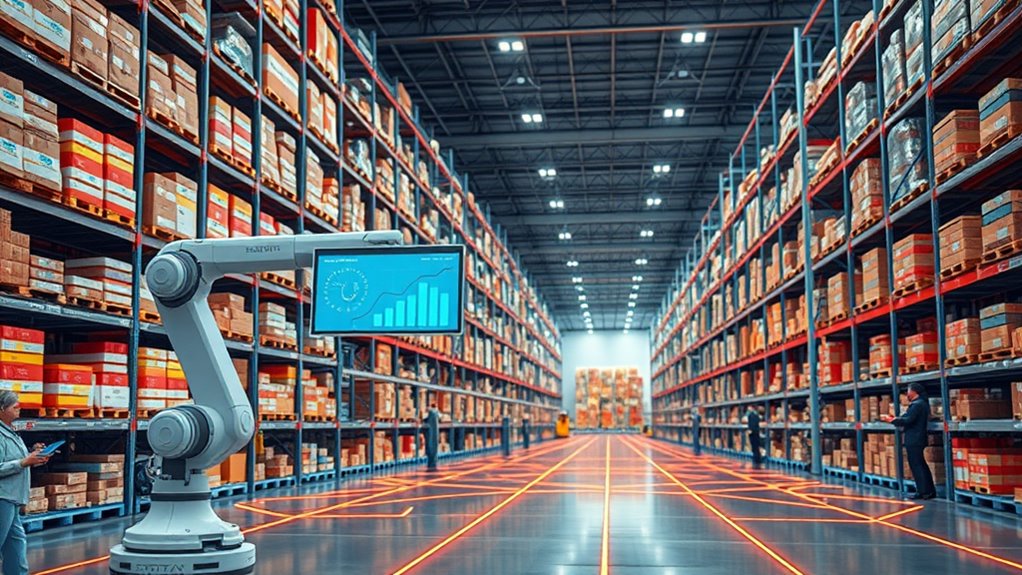
The influence of technology in supply chain management is swiftly broadening. Advanced technologies like artificial intelligence improve operational efficiency and enhance decision-making. Machine learning boosts demand forecasting, reducing issues like overstocking. The Internet of Things allows for real-time asset monitoring, resulting in greater transparency. Moreover, blockchain technology provides product traceability and automates processes through smart contracts, reducing errors. Predictive analytics further optimize resource allocation by forecasting demand fluctuations. As companies embrace these innovations, they simultaneously prepare for future challenges, ensuring supply chain resilience. Explore the specifics of how these technologies are shaping the environment of supply chain management.
The Role of Artificial Intelligence
The integration of artificial intelligence (AI) in supply chain management represents a transformative shift in the direction of improved efficiency and decision-making precision. By utilizing AI integration, organizations are able to exploit autonomous systems that optimize logistics and inventory management. This shift is characterized by decision automation, which minimizes human error and accelerates response times to market fluctuations, thereby enhancing supply chain resilience.
The application of intelligent robotics within warehouses and distribution centers exemplifies the significant role AI plays in process automation. These robots utilize machine vision to navigate complex environments and execute tasks with remarkable accuracy. This not only streamlines operations but additionally allows human workers to focus on higher-value activities.
Furthermore, AI enables organizations to derive data-driven insights from vast amounts of supply chain data. By employing cognitive computing techniques, businesses can analyze patterns and trends, leading to more informed decision-making processes. This algorithmic efficiency is essential in adapting to real-time changes in demand and supply, ensuring that resources are allocated effectively.
Benefits of Machine Learning
Machine learning offers significant advantages in supply chain management, particularly through improved demand forecasting and optimized inventory management. By analyzing historical data and identifying patterns, machine learning algorithms can predict future demand with greater accuracy, reducing the risk of overstocking or stockouts. Furthermore, these technologies streamline inventory processes, ensuring that resources are allocated efficiently and effectively.
Enhanced Demand Forecasting
Accurate demand forecasting is crucial for supply chain efficiency, and leveraging machine learning techniques has proven to greatly improve this process. By utilizing advanced algorithms, organizations can analyze vast datasets to uncover valuable consumer insights, enabling better decision-making. This approach facilitates collaborative planning among stakeholders, ensuring that all parties are aligned with market dynamics and customer behavior.
Machine learning can additionally identify seasonal trends more effectively, allowing companies to adapt their strategies proactively. The integration of data from multiple sources improves supply chain visibility, offering an all-encompassing view of inventory levels and demand patterns.
Here are some of the key benefits of improved demand forecasting through machine learning:
| Benefits | Description |
|---|---|
| Improved Accuracy | Reduces forecasting errors by analyzing historical data. |
| Agile Methodologies | Enables quicker responses to changes in demand. |
| Enhanced Consumer Insights | Helps in grasping customer preferences and behaviors. |
Incorporating these technologies streamlines operations while promoting a culture of agility, where businesses can swiftly adapt to changing market conditions. This shift eventually drives efficiency and boosts overall performance within the supply chain.
Optimized Inventory Management
Effective demand forecasting sets the stage for ideal inventory management, where machine learning plays a pivotal role in improving operational efficiency. By leveraging advanced algorithms, organizations can achieve better inventory turnover rates, ensuring that stock replenishment aligns closely with actual demand. Machine learning facilitates accurate inventory forecasting, which helps businesses maintain optimal levels of safety stock, thereby mitigating the risks associated with demand variability.
Moreover, improved inventory visibility enables supply chain professionals to monitor stock levels in real-time, allowing for swift adjustments in response to fluctuations. This adaptability promotes warehouse optimization, ensuring that storage space is utilized efficiently and reducing excess holding costs. Furthermore, supplier collaboration becomes more effective when data-driven insights inform procurement decisions, leading to lead time reduction and enhanced responsiveness to market demands.
Ultimately, the integration of machine learning into inventory management not only improves cost control but also drives a more agile supply chain. By embracing these technologies, companies can better navigate the challenges of modern logistics, ensuring they meet customer expectations while minimizing waste and inefficiencies.
Impact of Blockchain Technology
In recent years, blockchain technology has emerged as a transformative force in supply chain management. By leveraging blockchain security and decentralized ledgers, organizations can improve supply chain transparency, allowing stakeholders to trace products from origin to consumer. This increased visibility not only promotes trust among participants but additionally aids in digital asset management, guaranteeing that all transactions are recorded in a tamper-proof manner.
Smart contracts play a pivotal role in automating processes within supply chains. These self-executing contracts, which are directly written into code, enable automatic enforcement of terms upon meeting predefined conditions. This innovation streamlines operations and reduces the need for intermediaries, thereby minimizing costs and potential errors.
Furthermore, blockchain's traceability solutions greatly improve the ability to conduct supply chain audits. With a complete and immutable record of transactions, companies can easily verify compliance with regulatory standards, thereby assuring regulatory compliance. Nevertheless, the implementation of blockchain technology is not without its challenges. Interoperability challenges arise when integrating blockchain with existing systems, which can hinder full-scale adoption.
Consensus mechanisms are crucial to maintaining the integrity of decentralized ledgers, as they guarantee that all parties agree on the validity of transactions. By addressing these technical hurdles, organizations can reveal the full potential of blockchain technology in supply chain management, paving the way for more efficient, transparent, and secure operations.
IoT and Supply Chain Efficiency
The Internet of Things (IoT) plays an essential role in enhancing supply chain efficiency through real-time data tracking. By enabling continuous monitoring of inventory and asset conditions, organizations can make informed decisions that streamline operations. Furthermore, the integration of predictive analytics allows businesses to anticipate demand fluctuations and optimize resource allocation effectively.
Real-Time Data Tracking
Real-time data tracking has transformed supply chain management, enabling businesses to improve efficiency and responsiveness. By leveraging Internet of Things (IoT) technologies, organizations can achieve improved data visibility and supply chain transparency, which are critical for informed decision-making. The ability to monitor shipments in real time allows for proactive management of logistics, ultimately increasing operational agility.
With accurate shipment tracking, businesses can better assess performance metrics and identify bottlenecks in the supply chain. This level of insight not only streamlines processes but also improves collaboration tools, allowing teams to work together more effectively. In addition, real-time data tracking facilitates risk mitigation by alerting stakeholders to potential disruptions, enabling swift corrective actions.
The impact on customer satisfaction is significant, as companies can provide timely updates and accurate delivery estimates. Moreover, process automation driven by real-time data reduces manual intervention, minimizing errors and increasing efficiency. Overall, the integration of real-time data tracking in supply chain management empowers organizations to boost decision-making speed and operational performance, positioning them for success in a competitive environment.
Predictive Analytics Benefits
Utilizing real-time data tracking sets the stage for the integration of predictive analytics in supply chain management. This integration improves operational efficiency by enabling organizations to conduct thorough trend analysis and risk assessment. Companies can proactively identify potential disruptions and mitigate risks, ensuring smoother operations.
Predictive analytics promotes improved supplier collaboration by analyzing historical data and performance metrics, allowing businesses to make informed decisions. By comprehending supplier performance, companies can streamline processes and improve overall productivity. This data integration facilitates the automation of routine tasks, which greatly reduces operational costs.
Furthermore, accurate forecasting through predictive analytics leads to cost reduction by optimizing inventory levels and minimizing excess stock. This precision directly influences customer satisfaction, as timely deliveries and product availability become more reliable.
Ultimately, predictive analytics serves as a strong decision support tool, equipping supply chain managers with the insights needed to navigate challenges and adapt to market changes. By utilizing the capabilities of predictive analytics, organizations can not only enhance their supply chain efficiency but also drive long-term growth and sustainability in an increasingly competitive environment.
Real-Time Data Analytics
A significant advantage of modern supply chain management lies in the integration of real-time data analytics, which enables organizations to make informed decisions quickly. This capability is crucial for enhancing decision-making processes, as it allows businesses to analyze vast amounts of data instantly, generating insights that can be acted upon without delay. Effective data visualization techniques transform complex data sets into understandable visuals, facilitating stakeholder collaboration across cross-functional teams.
However, implementing real-time analytics is not without its challenges. Data integration challenges may arise when consolidating information from various sources, necessitating robust cloud-based solutions that provide seamless access to data. Furthermore, organizations must prioritize data security measures to protect sensitive information during the use of automated reporting systems that streamline data dissemination.
User interface design plays a critical role in guaranteeing that analytics tools are user-friendly, allowing team members from different departments to engage effectively with the data. Performance metrics analysis becomes more impactful when stakeholders can visualize and interpret trends, enabling them to make informed strategic decisions.
Future Trends in Supply Chain Tech
As organizations increasingly adopt real-time data analytics, they are similarly poised to explore future trends that will further transform supply chain management. Emerging technologies are set to improve efficiency, resilience, and sustainability in the supply chain environment. Notable trends include:
- Collaborative robotics: These robots will work alongside human operators, boosting productivity during the assurance of safety in logistics environments.
- Digital twins: This technology will create virtual replicas of supply chain processes, allowing for real-time monitoring and predictive analysis to optimize operations.
- Autonomous vehicles: Self-driving trucks and drones will innovate transportation, reducing delivery times and enabling more flexible distribution models.
- Smart contracts: Leveraging blockchain technology, these contracts will automate and secure transactions, streamlining processes and improving data security.
Furthermore, the integration of cloud computing facilitates seamless access to data across various platforms, enhancing collaboration. Edge computing will enable real-time processing of data at the source, improving decision-making capabilities. Companies are additionally prioritizing sustainability initiatives to meet consumer demand for environmentally friendly practices. This focus on sustainability, coupled with customer-centric logistics, guarantees that supply chains are responsive to customer needs while maintaining efficiency.
As organizations adapt to these trends, supply chain resilience will become a key focus, equipping businesses to better withstand disruptions. By embracing these advancements, companies can build a future-proof supply chain that addresses current demands but is prepared for the challenges ahead.
Frequently Asked Questions
How Does Tech Influence Supply Chain Job Roles and Skills?
In an era where technology reigns supreme, supply chain job roles and skills are transforming at an unparalleled pace. Job automation is revolutionizing traditional positions, leading to the emergence of new roles that demand heightened analytical prowess and adaptability. As a result, skill improvement has become imperative, as professionals must navigate complex systems and data-driven decision-making. This shift not just redefines responsibilities but requires a continuous commitment to learning in a constantly changing environment.
What Are the Costs Associated With Implementing Supply Chain Technology?
Implementing supply chain technology incurs several costs, including implementation expenses related to software acquisition, system integration, and training personnel. Furthermore, organizations must consider ongoing technology investments for maintenance, upgrades, and cybersecurity measures. These initial and recurring costs can greatly impact budgets, necessitating a thorough cost-benefit analysis to guarantee that the long-term efficiencies and improvements in productivity justify the financial outlay. Strategic planning is crucial to optimize these investments effectively.
How Can Small Businesses Leverage Tech in Their Supply Chains?
Small businesses can effectively leverage technology in their supply chains by utilizing data analytics to gain insights into market trends and customer preferences. This enables informed decision-making regarding inventory optimization, reducing excess stock and improving turnover rates. Furthermore, adopting cloud-based solutions can streamline communication and collaboration with suppliers, enhancing overall efficiency. By integrating these technological tools, small enterprises can greatly improve their operational agility and competitiveness in the marketplace.
What Challenges Do Companies Face When Adopting New Supply Chain Technologies?
Approximately 70% of companies report facing significant challenges when adopting new technologies in their supply chains. Key obstacles include data security concerns, integration hurdles with existing systems, and change resistance among employees. In addition, organizations must navigate training requirements to guarantee staff are proficient with new tools. Scalability issues can arise as businesses grow, and careful vendor selection is crucial to align technology solutions with operational needs, ultimately affecting successful implementation.
How Do Regulations Affect the Use of Technology in Supply Chains?
Regulations greatly affect the use of technology in supply chains by establishing requirements for regulatory compliance that organizations must comply with during technology adoption. These regulations can dictate the types of technologies that can be utilized, influencing their implementation timelines and operational processes. Furthermore, companies must guarantee that their technology solutions align with local and international standards, which can complicate integration efforts and necessitate additional resources for compliance monitoring and reporting.