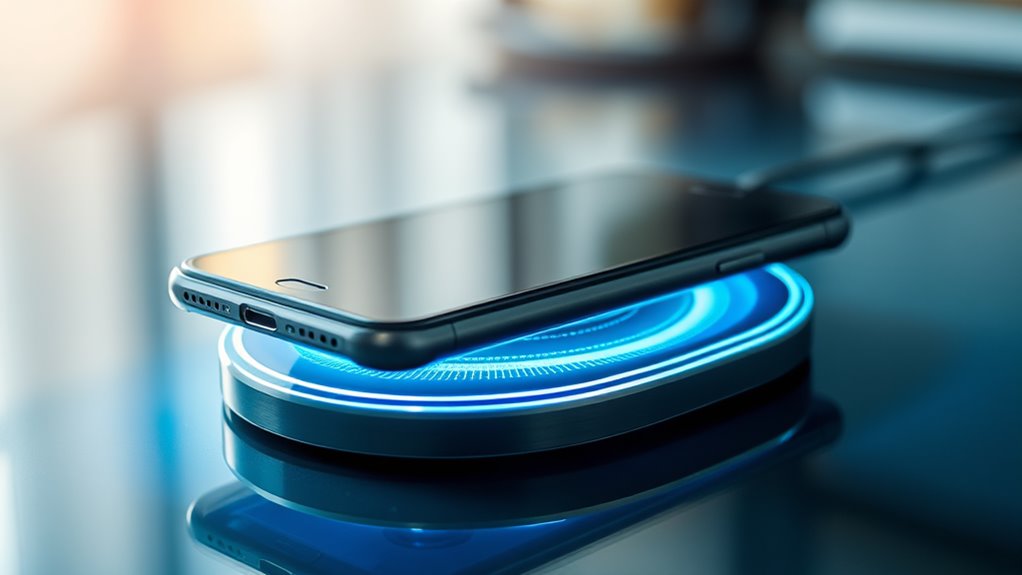
Wireless charging technology utilizes electromagnetic induction to transfer energy between devices and chargers without physical connectors. The most common method, inductive charging, works through two coils that create a magnetic field, enabling energy transfer based on Faraday's Law. Resonant inductive coupling improves this by allowing charging over greater distances. Efficiency is influenced by coil design, alignment, and frequency, as safety measures manage electromagnetic field exposure and overheating risks. As advancements emerge, wireless charging promises faster speeds and broader compatibility across devices. To understand the implications and future potential of this technology, further exploration reveals a wealth of insights.
Overview of Wireless Charging
Wireless charging technology represents a notable advancement in the way electronic devices are energized. This innovative method allows for the transfer of electrical energy from a source to a device without the need for physical connectors or cables. Primarily leveraging electromagnetic fields, wireless charging has emerged as a practical solution for a range of devices, from smartphones to electric vehicles, enhancing user convenience factors considerably.
The evolution of charging standards has played a pivotal role in the widespread adoption of wireless technology. Initially dominated by proprietary solutions, the industry has gradually shifted towards universal standards, such as Qi, which have encouraged interoperability among devices and chargers. This shift not only simplifies the user experience but also motivates manufacturers to adopt wireless capabilities in their products.
User convenience factors are central to the appeal of wireless charging. By eliminating the hassle of tangled cords and the need to locate charging ports, users can simply place their devices on a charging pad or dock. This ease of use is further complemented by the ability to charge multiple devices simultaneously, enhancing functionality in busy environments. Moreover, advancements in charging speed and efficiency continue to improve, addressing previous limitations associated with wireless methods.
Electromagnetic Induction Explained
At the core of wireless charging technology lies the principle of electromagnetic induction, a process that enables the transfer of energy between two coils through a magnetic field. This innovative approach relies on induction principles, where an alternating current (AC) flowing through a primary coil generates a varying magnetic field. When a secondary coil, placed in proximity to the primary coil, enters this magnetic field, an electric current is induced in the secondary coil, thereby facilitating energy conversion.
Electromagnetic induction is grounded in Faraday's Law, which states that a change in magnetic flux through a coil induces an electromotive force (EMF) in that coil. In practical terms, this means that the energy generated in the primary coil can be efficiently transferred to the secondary coil, which is usually embedded within a device, such as a smartphone or electric vehicle. The efficiency of this energy conversion can depend on several factors, including the alignment of the coils, the distance between them, and the frequency of the alternating current.
Wireless charging systems utilize these induction principles to create a seamless experience, eliminating the need for physical connections. As the demand for convenience and efficiency in charging devices continues to grow, grasping the mechanics of electromagnetic induction becomes vital. This technology not merely simplifies the charging process but additionally paves the way for advancements in various applications, ranging from consumer electronics to electric transportation.
Key Components of Wireless Chargers
One of the fundamental aspects of wireless chargers is their key components, which work in unison to facilitate efficient energy transfer. At the core of this technology lies the charging pad, which is often made from materials that improve electromagnetic fields, such as plastics or composites. The choice of charging pad materials can greatly influence performance and durability.
Coil design optimization is another important factor; the arrangement and dimensions of the coils dictate the efficiency of energy transmission technology. Efficient coil design can minimize energy loss during the charging process, thereby improving user experience factors such as charging speed and device compatibility.
Moreover, charging station aesthetics play a significant role in consumer acceptance and market adoption trends. A sleek design attracts users and encourages them to integrate wireless charging into their daily lives.
In parallel, environmental impact assessment is becoming increasingly important as manufacturers seek to minimize their ecological footprint. This encompasses the sustainability of materials used and the energy consumption of charging devices.
Consumer awareness campaigns are crucial for educating potential users about the benefits of wireless charging and its implications under various regulatory standards. These standards help promote safety and efficiency, supporting greater confidence in adopting this technology.
Resonant Inductive Coupling
Resonant inductive coupling is a fundamental principle behind the efficiency of wireless charging systems. This technology leverages the interaction between two coils: a transmitter coil and a receiver coil. When an alternating current flows through the transmitter coil, it generates oscillating magnetic fields, which can induce a voltage in the receiver coil. The effectiveness of this energy transfer is notably improved when both coils are tuned to the same resonant frequency.
The concept of resonant frequency is essential in maximizing the energy transfer. Each coil can be thought of as an LC circuit, comprising an inductor (the coil) and a capacitor. By carefully selecting the values of these components, engineers can set the resonant frequency to match that of the alternating current, thereby maximizing the amplitude of the generated magnetic fields. This resonance allows for more efficient energy transfer over greater distances compared to non-resonant systems, which rely solely on direct inductive coupling.
Moreover, resonant inductive coupling minimizes energy losses that typically occur as a result of misalignment between the transmitter and receiver coils. By maintaining a consistent resonant frequency, wireless charging systems can operate effectively even when the devices are slightly displaced from their best positions. This adaptability is particularly advantageous in consumer electronics, where user convenience is paramount. To conclude, resonant inductive coupling plays an important role in improving the performance of wireless charging technologies, making them more practical and efficient for everyday use.
Magnetic Resonance Technology
An emerging technology in the field of wireless charging is magnetic resonance, which extends the principles of resonant inductive coupling to enable more versatile applications. Unlike traditional inductive charging, which requires precise alignment between the transmitter and receiver coils, magnetic resonance allows devices to charge at greater distances and with more flexibility in positioning. This advancement markedly improves user convenience and paves the way for new charging standards that can accommodate multiple devices simultaneously.
At the core of magnetic resonance technology is the concept of resonant frequency. By tuning both the transmitter and receiver to the same frequency, energy transfer becomes more efficient, even across varying distances. This results in the potential for a broader range of applications, from charging smartphones to supplying electric vehicles.
| Aspect | Magnetic Resonance Technology |
|---|---|
| Charging Distance | Greater than traditional methods |
| Device Alignment | Flexible positioning |
| Efficiency | Improved through resonant frequency |
| Applications | Smartphones, EVs, household devices |
As this technology continues to evolve, it is likely to influence the development of future charging standards, making wireless charging an increasingly integral part of everyday life. The ability to charge multiple devices without intricate setup not merely simplifies the user experience but encourages the adoption of sustainable energy practices in various sectors.
Efficiency and Charging Speed
Efficiency and charging speed are critical factors in the evaluation of wireless charging technologies. The energy transfer mechanisms employed, along with various factors affecting efficiency, play a significant role in determining the overall performance of these systems. Furthermore, grasping speed comparison metrics can help consumers make informed decisions when selecting wireless charging solutions.
Energy Transfer Mechanisms
At the heart of wireless charging technology lies the intricate interplay of energy transfer mechanisms, which greatly influence both efficiency and charging speed. These mechanisms primarily involve electromagnetic induction and resonance, enabling the transfer of energy from a charging pad to a device without physical connectors.
Energy transfer efficiency is a crucial factor in this process, as it determines how much of the generated energy is effectively utilized for charging. High efficiency minimizes wasted energy as heat, which is a common issue in wireless systems. Nevertheless, the inherent design and alignment of the charging components can pose significant wireless energy challenges. Misalignment between the transmitter and receiver coils can lead to reduced energy transfer efficiency, resulting in longer charging times and increased energy loss.
Moreover, the frequency at which energy is transmitted likewise plays a crucial role. Different frequencies can affect both the speed and efficiency of the charging process. In the end, optimizing these energy transfer mechanisms is fundamental for enhancing the performance of wireless charging technologies, ensuring they meet the growing demands for fast and efficient energy delivery in modern devices.
Factors Affecting Efficiency
Many factors influence the efficiency and charging speed of wireless charging systems, greatly impacting their performance. One of the primary considerations is alignment refinement, which refers to the precise positioning of the transmitter and receiver coils. Proper alignment guarantees maximum electromagnetic coupling, reducing energy loss during transmission. When devices are misaligned, the efficiency diminishes, leading to longer charging times.
Coil design is another vital factor in determining charging efficiency. The shape, size, and material of the coils affect their inductive properties and energy transfer capabilities. Well-designed coils can improve the magnetic field strength, thereby boosting energy transfer efficiency. Furthermore, the use of ferrite materials can help focus the magnetic field, minimizing energy loss to the surrounding environment.
Other factors that can influence efficiency include the distance between the charging pad and the device, as well as the operating frequency of the system. Maintaining an ideal distance and frequency allows for better energy transfer and minimizes interference. Comprehending these factors is crucial for developing more efficient wireless charging technologies, eventually leading to faster and more reliable charging solutions for consumers.
Speed Comparison Metrics
During the assessment of wireless charging technologies, it is vital to take into account both efficiency and charging speed as essential metrics for performance. These two factors greatly influence user experience and determine the practicality of wireless charging solutions.
Charging speed refers to the rate at which energy is transferred to a device, whereas efficiency measures how much of that energy is effectively used for charging. To better understand these aspects, consider the following performance benchmarks:
- Charging Speed: Measured in watts (W), indicating how quickly a device can be charged.
- Efficiency Rate: Expressed as a percentage, representing the ratio of energy delivered to the energy consumed.
- Heat Generation: Excessive heat can indicate inefficiency and may affect both performance and device longevity.
- Compatibility: The ability of various devices to utilize different wireless charging standards (e.g., Qi, PMA) affects charging speed and efficiency.
Evaluating these metrics helps consumers make informed choices regarding wireless charging technologies, ensuring they select a solution that balances speed and efficiency for ideal performance.
Safety Considerations
As wireless charging technology continues to gain popularity, it is vital to address safety considerations associated with its use. Key concerns include potential exposure to electromagnetic fields, the risk of overheating during charging, and ensuring compatibility with various devices. Comprehending these factors is fundamental for promoting safe and effective charging practices.
Electromagnetic Field Exposure
Wireless charging technology has garnered attention not just for its convenience but likewise for the safety implications associated with electromagnetic field (EMF) exposure. As this technology becomes increasingly prevalent, comprehending the potential health impacts and adhering to established exposure limits is vital for consumers and manufacturers alike.
The scientific community continues to evaluate the safety of EMF exposure, particularly in relation to wireless charging. Key considerations include:
- Regulatory Guidelines: Organizations such as the International Commission on Non-Ionizing Radiation Protection (ICNIRP) provide exposure limits to guarantee public safety.
- Research Findings: Studies have examined the long-term health impacts of EMF exposure, often showing no conclusive evidence of harm at levels below established limits.
- Device Design: Manufacturers are encouraged to design devices that minimize EMF emissions, guaranteeing user safety during the maintenance of performance.
- Public Awareness: Educating users about EMF exposure and safety practices is fundamental, as informed consumers can make better choices regarding their technology use.
Overheating Risks
The rise of wireless charging technology also brings to light concerns regarding overheating risks, which can pose safety challenges for users. As devices draw energy wirelessly, efficient thermal management becomes vital to guarantee safe operation. The process of energy transfer generates heat, and if not properly managed, this can lead to overheating, potentially damaging both the device and the charger.
To mitigate these risks, manufacturers implement overheating prevention measures, such as integrated cooling systems and temperature sensors. These systems monitor the device's temperature and adjust the energy output accordingly, preventing excessive heat buildup. Furthermore, many modern wireless chargers are designed with materials that dissipate heat effectively, enhancing overall safety during the charging process.
Users can further take proactive steps to minimize overheating risks. It is recommended to place devices on a flat, hard surface during charging, as soft surfaces can obstruct airflow and trap heat. In addition, avoiding the use of cases that insulate heat can further support effective thermal management.
Ultimately, comprehending and addressing overheating risks is essential for safe and efficient wireless charging, guaranteeing that users can enjoy the convenience of this technology without compromising their safety.
Device Compatibility Issues
Ensuring device compatibility is fundamental for the safe and effective use of wireless charging technology. As the market evolves, various factors contribute to device limitations that can impact the user experience. Comprehending compatibility standards and charging protocols is critical to navigate the intricacies of different brands and their respective accessories.
Key considerations include:
- Material Considerations: The type of materials used in devices can affect charging efficiency and safety.
- Brand Differences: Diverse manufacturers may implement unique charging protocols, leading to inconsistencies in functionality.
- Firmware Updates: Regular updates can improve compatibility, ensuring devices adapt to new charging technologies.
- Accessory Integration: The ability to seamlessly integrate accessories can influence overall user satisfaction.
As design trends evolve, consumer preferences likewise shift, necessitating an awareness of how these changes can impact device compatibility. Without proper alignment with established standards, users may encounter issues that hinder performance and compromise safety. As a result, staying informed about the latest developments in wireless charging technology is imperative for both manufacturers and consumers alike.
Compatibility With Devices
A wide range of devices now supports wireless charging, reflecting the growing adoption of this technology across various sectors. As consumer electronics increasingly embrace this convenience, it is vital to take into account device compatibility and the various charging standards that facilitate it.
The most prevalent wireless charging standard is Qi, developed by the Wireless Power Consortium. This standard is widely adopted by numerous device types, including smartphones, wearables, and even some laptops. Nevertheless, compatibility may vary based on device specifications and the charging pads used. Comprehending these nuances can help consumers choose the right equipment for their needs.
Here's a summary of popular device types and their compatibility with various charging standards:
| Device Type | Supported Charging Standards | Examples |
|---|---|---|
| Smartphones | Qi, PMA, AirFuel | iPhone, Samsung Galaxy |
| Smartwatches | Qi | Apple Watch, Fitbit |
| Wireless Earbuds | Qi | AirPods, Galaxy Buds |
| Laptops | Qi | Dell Latitude, HP Elite |
This table illustrates the diversity of device types that can utilize wireless charging technology, showcasing notable examples and their corresponding standards. As manufacturers continue to innovate, it is vital for consumers to stay informed about the compatibility of their devices with existing and emerging charging standards. This awareness guarantees a seamless charging experience, maximizing the benefits of wireless technology in everyday life.
Future of Wireless Charging
There is a growing anticipation surrounding the future of wireless charging technology, driven by advancements in efficiency and convenience. As the demand for seamless energy transfer increases, several future innovations are poised to shape this industry. Market trends indicate a shift in the direction of faster, more reliable wireless charging solutions that cater to a variety of devices and applications.
Key areas to watch for future developments in wireless charging include:
- Increased Charging Speeds: Innovations aimed at reducing charging times will make wireless charging more competitive with traditional wired solutions, improving user experience.
- Improved Efficiency: Enhanced energy transfer methods will minimize energy loss during charging, leading to more sustainable practices and cost savings for consumers.
- Integration into Infrastructure: Future wireless charging could be integrated into public spaces, such as airports and shopping centers, allowing users to charge devices as they are on the go.
- Broader Compatibility: As technology evolves, we can expect greater compatibility across diverse devices, enabling a universal charging experience that streamlines consumer interactions.
These anticipated advancements emphasize the potential for significant technological progress and reflect shifting market trends that prioritize user convenience and environmental sustainability. As the industry continues to evolve, the future of wireless charging promises to deliver improved solutions that meet the growing demands of a connected world.
Real-World Applications
Wireless charging technology is increasingly finding practical applications across various sectors. In residential settings, home charging solutions are enhancing convenience, whereas the integration of this technology in electric vehicles is revolutionizing how we approach mobility. Moreover, the medical field is utilizing wireless charging for devices, ensuring reliable operation without the need for cumbersome cables.
Home Charging Solutions
Many households are increasingly adopting home charging solutions that utilize wireless technology, transforming the way devices are energized. This innovative approach to charging improves home charging efficiency and provides significant user convenience. Wireless charging eliminates the need for tangled cords and offers a streamlined experience for users.
Key benefits of wireless home charging solutions include:
- Simplicity: Users can simply place their devices on a charging pad without fumbling for cables.
- Versatility: Many devices, from smartphones to smartwatches, can be charged on a single pad, reducing clutter.
- Safety: Wireless charging minimizes wear on device ports, extending their lifespan and reducing the risk of electrical hazards.
- Aesthetic Appeal: Sleek and modern designs of wireless chargers can complement home decor, improving the overall look of living spaces.
As this technology continues to evolve, the integration of smart home features will further improve user convenience. Home charging solutions not only provide an efficient way to keep devices energized but additionally contribute to a more organized and visually appealing environment. This trend signifies a shift in the direction of a more sophisticated, user-friendly approach to energy management in the home.
Electric Vehicle Integration
The advancements in wireless charging technology are not limited to personal devices; they are furthermore making significant strides in the field of electric vehicle (EV) integration. As the demand for EVs grows, so does the need for efficient and user-friendly charging solutions. Wireless charging presents a promising alternative, facilitating the seamless transfer of energy without the need for physical connections.
To fully realize the potential of wireless EV charging, a robust charging infrastructure is crucial. This infrastructure must comply with emerging wireless standards that guarantee compatibility across various vehicle models and charging stations.
| Feature | Details |
|---|---|
| Efficiency | Up to 90% energy transfer |
| Installation | Ground-based or overhead systems |
| Charging Time | Comparable to wired options |
The integration of wireless charging into urban environments could transform how EVs are energized, allowing for charging in public spaces, parking lots, and even at home. As technology continues to evolve, the future of electric vehicle charging looks promising, paving the way for cleaner transportation solutions worldwide.
Medical Device Applications
In the domain of healthcare, wireless charging technology is revolutionizing the way medical devices are energized, enhancing both functionality and patient safety. This innovation plays a vital role in various medical applications, providing seamless energy solutions for implantable devices and ensuring that patients benefit from improved convenience and efficiency.
The integration of wireless charging in medical settings offers several advantages:
- Enhanced patient convenience: Eliminates the need for frequent battery replacements or wired connections.
- Surgical applications: Allows for the use of wireless sensors in operating rooms, reducing clutter and enhancing sterility.
- Remote monitoring and health tracking: Facilitates continuous data collection from devices without manual intervention.
- Energy harvesting and device miniaturization: Supports the development of smaller, more efficient devices that can operate longer without recharging.
As healthcare continues to embrace advancements in technology, the potential for wireless charging systems for medical devices is substantial. These systems not only improve patient outcomes but also pave the way for innovations that can lead to more effective and less invasive treatment options in the future.
Frequently Asked Questions
Can Wireless Charging Work Through Thick Phone Cases?
"Good things come to those who wait," yet regarding wireless charging, thick phone cases can pose a challenge. The efficacy of wireless charging greatly depends on case material and charging distance. Typically, materials such as rubber and silicone allow for better transmission, whereas thicker or metallic cases may hinder the process. Consequently, it is recommended to assess the compatibility of your case to guarantee ideal charging efficiency.
Does Wireless Charging Generate Heat During the Process?
Yes, wireless charging does generate heat during the process. This phenomenon occurs because of energy loss, which can affect charging efficiency. Effective heat management is essential to mitigate overheating, ensuring safe and ideal operation. Manufacturers often incorporate cooling mechanisms and advanced materials to improve thermal dissipation. By addressing heat generation, the overall performance and longevity of both the charging station and the device can be greatly improved, thereby providing a more efficient charging experience.
Can I Charge Multiple Devices Simultaneously?
Consider a busy household where multiple family members rely on their smartphones and smartwatches. Wireless charging technology allows for the simultaneous charging of multiple devices, provided they are compatible with the charging pad. Nonetheless, charging efficiency can vary based on the number and type of devices. High-quality charging pads often feature multiple coils to improve compatibility and maintain ideal efficiency, ensuring that each device receives sufficient energy without compromising performance.
Will Wireless Charging Drain My Battery Faster?
Wireless charging does not inherently drain your battery faster than traditional charging methods. Nevertheless, its charging efficiency can vary, potentially leading to increased heat generation, which may affect battery lifespan over time. If the wireless charger is not ideally aligned with the device, it may result in slower charging rates. To maintain battery health, it's advisable to use high-quality chargers and monitor device temperature during the charging process.
How Do I Know if My Device Supports Wireless Charging?
To determine if your device supports wireless charging, perform a compatibility check by consulting the manufacturer's specifications. Most modern smartphones and gadgets adhere to common charging standards, such as Qi or PMA. If your device is listed under these standards, it is likely compatible. Furthermore, some devices feature indicators, such as a wireless charging icon, which may provide further confirmation of their wireless charging capabilities. Always refer to the user manual for precise information.