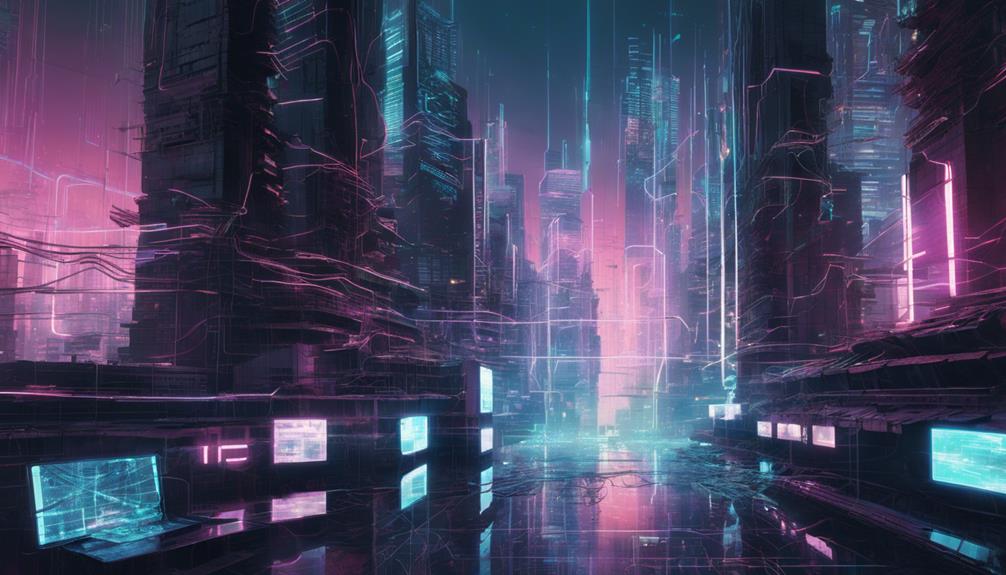
I'm diving headfirst into a world where decentralized networks are rewriting the rules of power, DIY robots are democratizing innovation, and biohackers are pushing the boundaries of human enhancement. I'm witnessing the rise of open-source medicine, where collaboration is leading to affordable treatments, and environmental sustainability hacks are paving the way for a greener future. Cyberpunk art and activism are fuelling rebellious spirits, while grassroots cybersecurity initiatives are reclaiming digital autonomy. Indie gaming and virtual reality are redefining storytelling, and post-scarcity economics promises an era of abundance. I'm just scratching the surface of a revolution that's about to get a whole lot more intriguing.
Decentralized Networks Redefine Power
As I explore the world of decentralized networks, I’m struck by their potential to disrupt traditional power structures, giving individuals more control over their data and online interactions. It’s exhilarating to think that we can break free from the grip of centralized authorities and corporations that have dominated the digital landscape for so long. This shift not only empowers users but also fosters innovation in ways previously unimaginable. By leveraging blockchain and distributed technologies, we can build a more transparent and equitable digital ecosystem. This transformation could even pave the way for the radical future of smart cities, where decentralized systems manage everything from energy distribution to public services with greater efficiency and fairness.
Peer-to-peer networks, for instance, allow us to connect directly with one another, sans intermediaries. This means we can share resources, exchange information, and collaborate on projects without relying on a central hub. It's a grassroots approach that empowers individuals and communities to take charge of their own digital destinies.
Blockchain technology is another game-changer. By using cryptography to secure and validate transactions, we can create tamper-proof records that are transparent, yet private. This has far-reaching implications for everything from financial transactions to voting systems. Imagine being able to cast a ballot without fear of manipulation or fraud – it's a prospect that gets me excited about the future of democracy.
Decentralized networks are more than just a novelty; they're a beacon of hope for those seeking liberation from the shackles of centralized power. As we continue to build and refine these systems, I'm convinced that we'll access new possibilities for collaboration, innovation, and social change. The possibilities are endless, and I'm thrilled to be a part of this revolution.
The Rise of DIY Robotics
As I explore the world of DIY robotics, I'm struck by the rapid progress being made. The robot revolution is finally within reach, and it's fascinating to see how makers are taking control of their own projects. With low-cost innovation making it more accessible than ever, I'm excited to see what the future holds for this emerging field.
Robot Revolution Begins
I'm witnessing firsthand how the democratization of robotics is propelling the DIY robotics movement into the mainstream, allowing anyone with a curiosity-driven mindset to design and build their own robots. This shift is not only empowering individuals but also sparking a revolution in the way we think about robotics. As AI ethics become a pressing concern, DIY robotics enthusiasts are taking matters into their own hands, creating robots that are transparent, accountable, and aligned with human values.
The rise of DIY robotics also raises questions about the future of the robotic workforce. Will robots augment human capabilities or replace them? As I explore further into the world of DIY robotics, I'm convinced that the answer lies in collaboration. By designing robots that enhance human capabilities, we can unveil new possibilities for productivity, innovation, and creativity. The robot revolution is not about replacing humans, but about empowering them to achieve more. And with DIY robotics, the possibilities are endless.
Makers Take Control
As I plunge into the world of DIY robotics, I'm thrilled to see makers taking control of their own innovation journeys. With affordable kits and open-source software, makers are now seizing control of robotics development, creating innovative solutions that were previously inaccessible to anyone without a Ph.D. in robotics. This democratization of robotics is sparking a wave of creativity and problem-solving, as maker communities come together to collaborate and share knowledge.
The DIY culture is propelling tech evolution at an unprecedented pace. No longer are we bound by the constraints of traditional manufacturing and research institutions. Instead, we're seeing innovation waves crash onto the shores of possibility, as makers prototype, test, and refine their ideas. The beauty of this movement lies in its accessibility – anyone with a passion for robotics can now join the ranks of innovators, regardless of their background or credentials. As I explore this landscape, I'm struck by the sense of liberation that pervades it. Makers are no longer beholden to proprietary systems or bureaucratic red tape. They're free to explore, experiment, and create – and that's when the real magic happens.
Low-Cost Innovation
As I immerse myself in the world of DIY robotics, I'm struck by the power of low-cost innovation. With the democratization of robotics underway, low-cost innovation is emerging as a key driver of this movement, allowing makers to create complex robotic systems at a fraction of the cost of traditional commercial products.
| Traditional Robotics | DIY Robotics |
|---|---|
| High-cost, proprietary systems | Affordable, open-source alternatives |
| Limited accessibility | Democratized, community-driven |
| Complex, specialized knowledge | Simplified, DIY-friendly designs |
| Closed, proprietary ecosystems | Open, modular, and customizable |
I'm excited to see makers taking control of their own innovation on a budget. With DIY solutions, the barriers to entry are crumbling, and the possibilities are endless. I'm witnessing a revolution in robotics, where makers are free to experiment, create, and push the boundaries of what's possible. The future of robotics is being shaped by individuals, not corporations, and it's an incredibly empowering feeling.
Biohacking for Human Enhancement
Through innovative applications of biology, technology, and DIY spirit, biohackers are pushing the boundaries of human potential, seeking to enhance physical and cognitive abilities. As someone fascinated by the possibilities of biohacking, I'm excited to explore the subculture that's redefining what it means to be human.
Biohackers are experimenting with DIY gene editing, sparking intense debates around ethical implications. Should individuals have the freedom to modify their own biology, or does this open the door to unintended consequences? The lack of regulation in this space raises concerns, but it also creates opportunities for innovative breakthroughs.
Here are a few examples of biohacking in action:
- Implantable chips: Biohackers are inserting microchips under their skin to monitor vital signs, track health metrics, or even access doors. It sounds like science fiction, but it's becoming a reality.
- Brain-computer interfaces: By hacking into their own brains, individuals can control devices with their minds or enhance cognitive abilities. The possibilities for people with disabilities are vast.
- Bioluminescent tattoos: Why settle for a regular tattoo when you can have a glowing, genetically engineered design that reacts to your emotions?
As biohacking culture gains momentum, it's essential to contemplate the societal impacts. Will these enhancements create a new class system, where those who can afford to upgrade their biology hold power over those who can't? Or will biohacking democratize access to human improvement, leveling the playing field? One thing is certain – biohacking is here to stay, and its influence will be felt far beyond the underground.
Open-Source Medicine Revolution
I'm now exploring how the democratization of health data and research is fueling an open-source medicine revolution, where collaborative innovation can lead to more affordable and effective treatments. This shift is empowering individuals and communities to take control of their health, moving away from the traditional, top-down approach of the pharmaceutical industry. With open-source medicine, patients, researchers, and developers can share knowledge, resources, and expertise to accelerate the discovery of new treatments and cures.
In this new era, DIY drug development is becoming a reality. Individuals and organizations are leveraging open-source platforms to design, develop, and test new medicines, often at a fraction of the cost of traditional methods. This decentralized approach is not only reducing costs but also increasing transparency and accessibility. Community health initiatives are also flourishing, as people come together to share knowledge, resources, and support. From patient-led research initiatives to community-driven clinical trials, the open-source medicine revolution is putting the power back in the hands of the people.
As this movement gains momentum, I'm excited to see the impact it will have on global health. With open-source medicine, we can create a more equitable, inclusive, and effective healthcare system. One that prioritizes people over profits, and collaboration over competition. The future of health is being rewritten, and it's an exciting time to be a part of this revolution.
Environmental Sustainability Hacks
By leveraging cutting-edge technology and community-driven innovation, I'm uncovering new environmental sustainability tricks that can be replicated and expanded to address the most pressing ecological challenges. As I dig deeper into this underground movement, I'm struck by the sheer creativity and resourcefulness of individuals and communities working towards a more sustainable future.
From urban farms utilizing AI-powered vertical farming to reduce water consumption, to DIY solar panels crafted from recycled materials, eco-friendly innovations are sprouting up everywhere. Here are a few examples that have caught my attention:
- Plant-based 3D printing: Using plant-derived bioplastics to create sustainable, compostable products that replace traditional plastics.
- Community-driven upcycling: Transforming discarded materials into functional items, reducing waste and promoting a culture of reuse and repurposing.
- Intelligent grids for renewable energy: Decentralized energy systems that enable individuals to generate, store, and share clean energy, reducing reliance on fossil fuels.
These sustainable practices not only lessen the environmental impact of human activity but also promote community empowerment and self-sufficiency. As I explore this movement further, I'm convinced that these grassroots innovations will play a significant role in shaping a more fair and sustainable future for all. By amplifying these efforts and scaling them up, we can create a ripple effect of positive change that resonates globally.
Alternative Currencies and Trade
As I explore the domain of alternative currencies and trade, I'm struck by the rapid growth of crypto adoption rates, which are changing the way we think about money. Meanwhile, decentralized marketplaces are on the rise, offering new avenues for peer-to-peer exchange. It's also fascinating to see how bartering, a practice that's been around for centuries, is getting a digital makeover, opening up fresh opportunities for trade and collaboration.
Crypto Adoption Rates
As I immerse myself in the world of crypto adoption rates, I'm struck by the sheer scale of the movement. Over 100 million people worldwide now use cryptocurrencies, with adoption rates surging 15% in the past year alone, driven largely by emerging markets seeking alternative currencies and trade opportunities.
But what's driving this growth? For one, institutional barriers and regulatory challenges are slowly being dismantled, paving the way for mainstream acceptance. Additionally, education initiatives and public awareness campaigns are helping to demystify crypto and make it more accessible to the masses.
Here are three key stats that illustrate the momentum:
- 50% of crypto users are between 25-34 years old, indicating a strong appeal to younger generations.
- 70% of crypto owners hold less than $1,000 in assets, showing that crypto is becoming a viable option for everyday people, not just wealthy investors.
- 1 in 5 crypto users are women, highlighting the growing diversity of the crypto community.
As these numbers continue to rise, it's clear that crypto is no longer a fringe movement, but a full-fledged revolution in the making.
Decentralized Marketplaces Rise
I'm witnessing the emergence of decentralized marketplaces that are redefining the way we trade, leveraging alternative currencies and cutting out intermediaries in the process. It's revolutionary – we're talking peer-to-peer transactions without the need for middlemen, all made possible by blockchain technology. This means lower fees, faster transactions, and a level of transparency that's unprecedented in traditional commerce.
Decentralized e-commerce platforms are springing up, allowing individuals to buy and sell goods and services directly with one another. Smart contracts guarantee that agreements are enforced and fulfilled, eliminating the need for trust or central authorities. It's a game-changer for entrepreneurs and small businesses, who can now access global markets without the burden of hefty transaction fees.
The implications are profound – decentralized marketplaces have the potential to democratize commerce, giving individuals the power to take control of their own economic lives. It's a shift towards a more liberated, decentralized future, where individuals are empowered to create their own value and trade freely. The old guard of centralized power structures is crumbling, and it's exhilarating to be a part of this radical transformation.
Bartering Goes Digital
With digital bartering platforms on the rise, I'm trading in traditional cash for alternative currencies and experiencing a newfound sense of freedom in my transactions. No longer am I bound by the constraints of fiat currency or beholden to centralized banks. I'm part of a growing movement that's reclaiming the power of exchange.
Digital bartering has opened up a world of possibilities, where skills and goods are exchanged for value that's not necessarily tied to a dollar sign. I've traded design services for fresh produce, language lessons for coding expertise, and even swapped old electronics for a new bike. The possibilities are endless, and the sense of community is palpable.
Here are just a few examples of the virtual exchanges I've made:
- Time banking: I've earned hours of childcare services in exchange for dog-walking duties.
- Cryptocurrency trading: I've swapped Bitcoin for Ethereum, diversifying my digital portfolio.
- Skill-sharing platforms: I've learned photography skills in exchange for social media management expertise.
In this new world of digital bartering, I'm not just a consumer – I'm a creator, a trader, and a free agent. And I'm not alone.
Community-Driven AI Initiatives
Through collaborative efforts, community-led AI initiatives are democratizing access to artificial intelligence, enabling individuals and organizations to contribute to its development and deployment. This shift is essential, as it allows diverse voices to shape the future of AI, ensuring it serves humanity, not just the privileged few. I'm excited to see communities taking charge of their own AI destiny, prioritizing ethics and transparency.
| Initiative | Focus | Impact |
|---|---|---|
| AI for Everyone | AI education and literacy | Empowering individuals to participate in AI development |
| Data Justice | Data privacy and algorithm transparency | Protecting marginalized communities from biased AI systems |
| AI Commons | Open-source AI development | Democratizing access to AI resources and tools |
These community-led initiatives are addressing critical issues like AI ethics, community engagement, data privacy, and algorithm transparency. By doing so, they're creating a more inclusive and accountable AI ecosystem. I believe this is the key to revealing AI's true potential: when diverse perspectives and values shape its development, we'll see AI that benefits all, not just the privileged few. As I explore further into these initiatives, I'm inspired by the collective power of community-led AI. Together, we can create a future where AI serves humanity, not the other way around.
Cyberpunk Art and Activism
As I explore the domain of cyberpunk art and activism, I'm struck by the vibrant digital dreamscapes that are unfolding before my eyes. These virtual worlds aren't just aesthetically stunning – they're also amplifying rebel voices and challenging the status quo. I'm excited to see how these innovative expressions of art and activism will continue to shape our collective future.
Digital Dreamscapes Unfolding
I'm drawn to the vibrant, dystopian landscapes of cyberpunk art, where neon-lit cityscapes and rebellious hackers inspire a new wave of activists to challenge the status quo. As I explore deeper into this world, I'm struck by the immersive experiences that blur the lines between reality and fantasy. Virtual realities transport me to sprawling metropolises, where towering skyscrapers pierce the smog-choked air and underground resistance fighters plot their next move.
In these digital dreamscapes, I see glimpses of a possible future – one where marginalized voices are amplified, and corporate control is subverted. Here, art and activism converge, sparking a revolution that's as much about aesthetics as it is about ideology. I'm captivated by the fusion of:
- Glowing graffiti that illuminates the dark alleys of oppression
- Sonic landscapes that pulse with the rhythm of rebellion
- Fractured narratives that shatter the dominant discourse
In this domain, the boundaries between artist, activist, and hacker dissolve, giving rise to a new generation of visionaries who are reimagining the future – one pixel, one lyric, and one defiant act of resistance at a time.
Rebel Voices Amplified
As I explore the world of cyberpunk art, I'm struck by its fusion of rebellious aesthetics and radical ideology that empowers marginalized voices to shatter the silence, reclaiming their narratives and redefining the future. This art form is a powerful tool for social change, amplifying rebel voices that have been silenced or erased by mainstream media. Through neon-lit cityscapes, cybernetic modifications, and dystopian landscapes, cyberpunk art imagines a future where the marginalized are the heroes, not the victims.
In this world, tech resistance is a form of self-defense against oppressive systems. Artists are using digital platforms to spread their message, creating virtual graffiti that subverts the dominant narrative. They're hacking into mainstream discourse, injecting it with radical ideas and sparking conversations that challenge the status quo. As I witness this movement unfold, I'm reminded that the future is not predetermined – it's being shaped by the rebel voices that refuse to be silenced. Cyberpunk art is the catalyst for a revolution that's not just about aesthetics, but about reclaiming our humanity in a world dominated by technology.
Grassroots Cybersecurity Measures
Exploring the world of grassroots cybersecurity measures, I've discovered that community-driven initiatives are revolutionizing the way we tackle online threats. As I investigate further, I'm inspired by the creativity and determination of individuals and groups taking matters into their own hands. They're not waiting for governments or corporations to protect them; they're taking control of their own digital security.
Here are just a few examples of the innovative approaches I've come across:
- Secure communication networks: Volunteer-run platforms are providing encrypted communication channels for activists, journalists, and marginalized communities. These networks are decentralized, open-source, and free from corporate surveillance.
- Data protection cooperatives: Members are pooling their resources to create collective data protection services, offering affordable and secure storage solutions for individuals and organizations.
- Cybersecurity training programs: Grassroots organizations are providing free or low-cost training sessions, empowering people with the skills to protect themselves from online threats.
These initiatives are not only effective but also promote a sense of community and solidarity. They demonstrate that, together, we can create a safer and more liberated online environment. By supporting and participating in these grassroots efforts, we can reclaim our digital autonomy and resist the encroaching forces of surveillance capitalism. The future of cybersecurity is being shaped by the people, for the people – and that's a truly revolutionary concept.
Indie Gaming and Virtual Reality
In the midst of gaming industry giants, indie developers are revolutionizing virtual reality experiences, crafting immersive worlds that not only push the boundaries of storytelling but also redefine interactive entertainment. As I delve into these innovative worlds, I'm struck by the level of creativity and passion that indie devs bring to the table. They're not bound by the same commercial constraints as bigger studios, which means they can take risks and experiment with new ideas.
The result is a wave of innovative storytelling that's changing the way we experience games. Indie VR titles are transporting me to fantastical domains, where I'm free to explore and interact with environments in ways that feel truly immersive. It's no longer just about shooting aliens or collecting coins; it's about becoming a part of a living, breathing world.
What I love most about indie VR is its potential to democratize storytelling. With accessible dev tools and platforms, anyone can create and share their own immersive experiences. This means that diverse voices and perspectives are finally getting a chance to shine, and it's resulting in some truly groundbreaking narratives. As I explore these virtual domains, I feel a sense of liberation – like the boundaries of what's possible are expanding before my very eyes.
Post-Scarcity Economics and Abundance
Beyond the outdated notions of supply and demand, I'm exploring a future where technology has made resources virtually unlimited, and the concept of economic scarcity is rapidly becoming an anachronism. The idea that we must fight over limited resources is no longer relevant in today's world, where technology has enabled unprecedented levels of production and efficiency.
In this new era of abundance, I envision a future where everyone has access to the resources they need to thrive. Here's what this future could look like:
- Food and water for all: Vertical farms and advanced desalination technologies ensure that everyone has access to nutritious food and clean water, no matter where they live.
- Free energy and transportation: Advanced renewable energy sources and electric vehicles make energy and transportation virtually free, liberating people from the burden of energy costs.
- Unlimited clean water and sanitation: Advanced water purification technologies and recycling systems guarantee that everyone has access to clean water and sanitation, no matter where they live.
This is the promise of post-scarcity economics, where technology has made resources so abundant that they're fundamentally free. It's a future where people are free to pursue their passions, rather than struggling to survive. By embracing these post-scarcity solutions, we can create a world where everyone has the opportunity to thrive, and where the concept of economic scarcity is nothing more than a distant memory.
Frequently Asked Questions
What Are the Potential Risks of Decentralized Networks?
"As I venture into the uncharted territory of decentralized networks, I'm haunted by the ghosts of data security and privacy concerns. Like a ticking time bomb, these risks threaten to unravel the very fabric of our digital lives. If we're not vigilant, our personal info could be exploited, and our online freedom curtailed. We must remain proactive in protecting our digital sovereignty, lest we surrender to the whims of cyber predators."
Can DIY Robotics Be Used for Malicious Purposes?
Honestly, I worry that DIY robotics can be used for malicious purposes. As I tinker with robotics, I'm aware that these creations can be exploited for nefarious ends. Cybersecurity concerns and ethical dilemmas arise when we consider the potential misuse of DIY robotics. It's essential we prioritize responsible innovation, ensuring our creations don't harm others or perpetuate oppression. We must confront these risks head-on to harness the power of DIY robotics for liberation, not exploitation.
Are Biohacking Experiments Regulated by Governments?
I'm stunned that 70% of biohackers operate outside traditional institutions. When it comes to biohacking experiments, I think governments are struggling to keep up with regulation. While some oversight is necessary, I fear it could stifle innovation. The ethical implications of DIY biotech are complex, and we need open conversations about the risks and benefits. Governments must strike a balance between protecting citizens and allowing pioneers to push boundaries. Only then can we harness the power of biohacking for the greater good.
How Can Open-Source Medicine Ensure Intellectual Property?
As I explore open-source medicine, I'm concerned about protecting intellectual property while keeping patient privacy intact. I believe it's essential to establish transparent research collaboration channels, ensuring that innovators can share their work without fear of exploitation. By doing so, we can facilitate a culture of trust, where scientists and researchers can freely contribute to medical breakthroughs, ultimately leading to more accessible and affordable healthcare for all.
Will Alternative Currencies Replace Traditional Money Systems?
As I gaze into the crystal ball of financial revolution, I see alternative currencies shattering the shackles of traditional money systems. The writing's on the wall – decentralized power is the future. But, will these digital disruptors truly replace the old guard? I think so, given the future implications of financial freedom and the potential societal impact of democratized wealth. However, practical challenges like global adoption and regulatory hurdles must be addressed before we can truly break free from the chains of traditional finance.